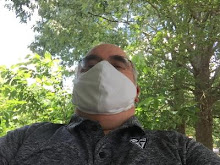
Tuesday, July 27, 2010

O God Our Help in Ages Past

Apart from Come, Holy Ghost at parish missions, some Marian hymns for May and October devotions, and of course Holy God, We Praise Thy Name at Benediction, English-language hymns were not a significant part of growing up Catholic in the 1950s and early 1960s. I first heard O God, Our Help in Ages Past not in a church but watching Ichabod Crane fleeing in terror from the Headless Horseman, fortifying himself by singing that wonderful hymn. I never forgot it and, having it heard and sung it in churches many times since, I have always loved it.

I chose it to open my Mass of Thanksgiving this past Sunday obviously because of its beauty and widespread familiarity - I saw people actually singing in church! - but also because it so accurately expressed my mood of gratitude for blessings past and confident hope for blessings future, which it was my hope to express at Sunday's liturgy. I think the hymn worked very well for that purpose!

Our God, Our Help in Ages Past was composed by Isaac Watts. It paraphrases Psalm 90. and was originally part of The Psalms of David Imitated in the Language of the New Testament, published by Watts in 1719. (In his 1738 hymnal, John Wesley changed Watts' "Our God" to "O God"). The hymn tune "St. Anne" was composed by William Croft in 1708, originally intended for a version of Psalm 62 but now universally associated with this hymn.The hymn is often sung at festive occasions in the UK and was famously sung on the doomed warship HMS Prince of Wales at the Sunday service attended by FDR and Winston Churchill at their first meeting in 1941 (at which the "Atlantic Charter" was proclaimed.)


Monday, July 26, 2010

Moving Day

After all the private goodbyes, Friday's parish celebration, and yesterday's magnificent Mass of Thanksgiving, finally at dawn today it was time to move!

I can barely begin to express how emotional for me these past few days have been. The 200 or so parishioners who came out in the heat to to attend Friday evening's parish party and all the affection they showed touched me deeply, as did Fr. Gil Martinez's kind words. Then the Mass yesterday, the presence of so many parishioners and of at least one old friend from Good Shepherd (who had also traveled to Toronto in 1995 for my ordination), the magnificent music (highlighted by Mozart's Alleluia, reminiscent of my 1st Mass 15 years ago at St. Malachy's, and the incredible standing ovation at the end inevitably brought me to tears. Having so long lingered in something resembling the non-planet Pluto for much too much of my Paulist life, I finally felt a real corner had been turned in my journey.

And now the parties are over, and the work begins!

May SS. Joachim and Anne, whom the Church honors today and whose union gave the world the Immaculate Virgin Mary, the patroness of my new parish, pray for me as I prepare to assume the responsibilities of my new ministry!

Sunday, July 25, 2010

Final Words


Homily at Saint Paul the Apostle Church, NYC, July 25, 2010

(Mass of Thanksgiving for 10 Years as Associate Pastor)

It has, occasionally, been alleged that if I don’t know an answer, I just make something up. So let me assure you right away that everything I am saying to you today is for real – and from the heart.

An Episcopalian friend of mine once told me (more than 30 years ago now) that having a set Lectionary, instead of being able to choose the readings for yourself, is actually a great blessing, because it forces you to let God’s word set the theme instead of setting it yourself. If it had been up to me to pick the scripture readings for my final Mass as your Associate Pastor today, I very much doubt I would have chosen Abraham’s tedious argument with God about the doomed Cities of the Plain (Genesis 18:20-32). But that’s what the Church has set before us today – I presume in order to reinforce the Gospel’s emphasis on perseverance in prayer (Luke 11:1-13).

To be honest, I’m not sure how well that pairing actually works. Apparently, after all Abraham’s persistent effort, not even 10 innocent people could be found, and so the cities got destroyed anyway – not really the best advertisement perhaps for the benefits of petitionary prayer. Jesus may have had that in mind with his charming story of the father who knows enough to give his son the right fish or egg, no matter what. The reality is that a lot of our prayers don’t seem to get answered – at least not when and how we want them. I can remember praying to become a priest for far too manyyears before it finally happened. Now that I am finally getting to do what priests are primarily meant to do, serve a community as its pastor, one helpful friend recently quoted these words of Jesus to me and suggested tha tthe ;ien between the egg and the scorpion may be a very fine line indeed.
Maybe that’s why Jesus introduced his discussion of prayer with a prayer text of his own. Volumes have been written over the centuries about the Lord’s Prayer, and I certainly have nothing new or brilliant to add – not even anything to make up! But it does seem to me that Jesus was making a point by the way he structured his Prayer.

The first part of it is all about our conforming ourselves to God's agenda. The fact is God’s name will be hallowed, and God’s kingdom will come, whatever we say or do. What we’re really praying for here is that we may be fit for membership in God’s kingdom. When we look at it that way, then everything else we pray for in the Lord’s Prayer - and everything else we ever pray for anytime - only makes sense in relation to that primary petition. Abraham could presume on God’s response because he had already so completely aligned himself with God’s will.

And so must we.

So whatever we pray for, it becomes true prayer insofar as we are striving to align ourselves with God’s will and God’s kingdom, a task that is really the work of a lifetime. Jesus invites us – indeed, challenges us, and it is a challenge, because it really is hard sometimes to believe that our prayers are going to be answered. Jesus challenges us to trust that, whatever work we do and wherever we do it, when we align ourselves completely with his kingdom and make that the primary thing that we are about, then everything else will fall into place.

Additional Comments at the End of the Mass:

So now it’s time to say good-bye. (By this time tomorrow, I should be already ¾ of the way to Knoxville).

It’s been a great 10 years, and I cannot begin to express how grateful I am for everything – and above all for you, the people of Saint Paul the Apostle Parish, who have made this parish what it is and have made my time here such a blessing and a joy. I have repeatedly reminded people these past several weeks that good-bye does not necessarily mean farewell, and that with today’s technology people can remain as connected to one another as they care to be. Much more importantly, however, I believe – presumably we all believe (which is why we are in this Church here today) – that we are already all connected to one another where it matters most in the Body of Christ, the Church. Wherever we go in life, whatever we do, whatever our successes or our failures, we all always have a place together at the Lord’s Table.

And so, since the Church invites us to talk about prayer, I ask you finally to pray for me, to pray that I will be the person, the priest, and the pastor God has called me to be – that, as a person, my relationship with the Lord will grow ever more real, that, as a priest, I may be ever more conscious of the great treasure I have received in this vocation, and that, as a pastor, I may be a worthy shepherd for those I have been sent to serve.

Saturday, July 24, 2010

Saying Goodbye


For anyone who cherishes his friends and values stability in life, saying goodbye has to be hard. The consciousness that goodbye doesn't necessarily mean farewell makes it easier, of course , as does the sense that we are all - and remain - connected as part of something so wonderful and so much bigger than ourselves - our life together as Christ's Body, the Church.

On the other hand, the practicalities of moving - packing, throwing things away, recording one's change of address, transferring files from one computer to another, etc. - all that stuff is stressful, to say the least. But that stuff is also, of course, temporary. The human relationships - personal and pastoral - are lasting, which is what makes the many rituals of saying goodbye so precious.

My final week in New York began with a Paulist in my honor in the 59th Street Paulist residence. At mid-week, I went to Peekskill in Westchester for a fun and nostalgic goodbye dinner with 5 of my cousins and their husbands. Then last night the parish pulled out all the stops at a fantastically festive celebration in the parish center. It was a great reflection and a true celebration of the wonderful community we have together created here over these years.
Tomorrow, it will be my turn to ritualize all that, celebrating Sunday Mass here for the last time as associate pastor and giving thanks for the privilege of serving here these past 10 years and for all the blessings I have received and for the blessing these 10 years have been for all of us who have called St. Paul the Apostle Parish our spiritual home.

For we do not preach ourselves but Jesus Christ as Lord, and ourselves as your slaves for the sake of Jesus. For God who said, "Let light shine out of darkness," has shown in our hearts to bring to light the knowledge of the glory of God on the face of Jesus Christ (2 Corinthians 4:6).

Tuesday, July 20, 2010

Kristin Lavransdatter


Tonight will be my last monthly discussion of “Great Catholic Fiction” at St. Paul the Apostle Parish in New York. The sadness of saying “good-bye” to what has become one of my favorite parish activities is being balanced somewhat by my joy at being able to end my participation in this series with such a wonderful book – Kristin Lavransdatter (volume 1: The Wreath), by Sigrid Undset (1882-1949), Norwegian novelist, Catholic convert, and winner of the 1928 Nobel Prize in Literature.


The Wreath is the first volume in a trilogy about the life of a certain Kristin Lavransdatter, dramatically set in 14th-century Norway. Beautifully written, the book effectively evokes the feel of medieval Norwegian society. The reader is immersed not only in the inner life of the book’s heroine but also in the interpersonal relational dynamics of her family - immediate and extended - and her local rural community. Reading Undset, I felt I could begin to feel what it would have been like to live in such a family, in such a place, in such a time. Interwoven, meanwhile, with the micro story of Kristin and her family is the macro-story of Norway’s nobility and monarchy and that most omnipresent of all medieval social institutions, the Catholic Church. Undset effectively evokes the varied facets of the Church’s presence – powerful monasteries and convents, charismatic itinerant friars, the village priest and his family, still at some level competing against and coexisting with the rooted remnants of older ways. On top of everything else, Kristin goes through a process of personal development that causes her to overstep conventional expectations to insist on her own (but by no means more certainly successfuly) path to personal happiness – a plot contemporary readers may well regard as surprisingly modern (which may actually say more about us than it says about the Middle Ages).


My only regret is that my preoccupation with my move has made it impossible for me to follow reading The Wreath with its two sequels, The Wife and The Cross. But I fully intend to read them as soon as I have the opportunity!