Sunday, May 31, 2020

Filled with the Holy Spirit

I was glad when they said to me: We will go to the house of the Lord. The musicians here may recognize those opening words of Psalm 122 as the beginning of Sir Hubert Parry’s great British coronation anthem.

This is no coronation, of course. But we are rejoicing today! Most of us haven’t been here, at least not together for Mass, in more than two months. So we are glad, all of us, to be back again in the house of the Lord! It is great to be back in church again, and I am thrilled to see so many of you again here today! Gathering here around the altar is at the heart of how we express who we are and become who we hope to be.

But, of course, the point of coming to church is that this then continues outside - in who we are and who we become, the Church we are and become, in and for the sake of the wider world. That is the point of Pentecost, the challenge of Pentecost, which we are celebrating in a special way this year not just by getting together again but by welcoming new members into the Church.

“Pentecost” is a Greek word referring to the 50th day – originally the 50th day after Passover. Its Hebrew name, Shavuot, means “weeks,” a reference to the “week” of seven weeks that began with Passover. It originated as a kind of thanksgiving festival for the late spring, early summer harvest. It was to celebrate this festival that devout Jews from every nation under heaven came as pilgrims to Jerusalem, in the familiar Pentecost story in the Acts of the Apostles.

By then, Pentecost had become a commemoration of the covenant at Mount Sinai, the giving of the 10 commandments, which (according to Exodus) had happened just about seven weeks after the exodus from Egypt.  Just as summer fulfills the promise of spring, the covenant at Mount Sinai fulfilled the promise of Israelite nationhood of which the exodus had been but the beginning.

Likewise, the coming of the Holy Spirit fulfilled the promise of the resurrection, transforming the disciples from fearful followers of a now absent Jesus into faith-filled witnesses empowered to transform the whole world.

In our current calendar, Pentecost marks the transition from Easter to Ordinary Time, the time of fulfillment, the time of the Church, when we reflect the resurrection’s promise in our ordinary lives. Gathered here, we worship the Risen Lord, seated at his Father’s right hand. From here, we continue Christ’s work in the world.

And there remains much work to be done.  At Pentecost the Holy Spirit symbolically repaired the division of the human race, when strangers from every nation heard the apostles speaking in their own tongue.  Even so, still today, as Pope Francis has reminded us, “fear deprives us of the desire and the ability to encounter the other,” someone different from ourselves, and so deprives us “of an opportunity to encounter the Lord” [Homily, World Day of Migrants and Refugees, January 14, 2018]. We have all struggled these past months – and will continue to struggle for some time yet (as our seating arrangement reminds us) - with how fear (in this case the very sensible fear of a disease) can distance us – and, if we let it do so, separate us completely from one another. All this therapeutic distancing has also thrown a bright - but sad - light on the deeper distances that divide our society and so set us apart when we most need to come together as one.

Hence the Risen Lord’s parting gift of the Holy Spirit to his Church. Back when many of us were preparing for Confirmation, we memorized the gifts of the Holy Spirit – wisdom, understanding, counsel, fortitude, knowledge, piety, and the fear of the Lord. We call them gifts, because we don’t produce them on our own. They are given to us – to transform us into true children of God and to enable us to live in a new way. The results of that transformation, the visible effects we experience of the Holy Spirit active in our lives are what we call the fruits of the Holy Spirit. We memorized them too - charity, joy, peace, patience, kindness, goodness, generosity, gentleness, faithfulness, modesty, self-control, chastity.

That’s how the promise of the resurrection is fulfilled and expresses its effect in our ordinary lives. Pentecost ritualizes annually what happens weekly with the transition from Sunday to Monday. From our Sunday celebration around the unleavened bread which has become the body of our Risen Lord, we are sent forth, filled with the Holy Spirit, to renew the face of the earth, as the Risen Christ’s permanent presence in the leavened bread of our daily lives in the world.

Homily for Pentecost Sunday, Immaculate Conception Church, Knoxville, TN, May 31, 2020.

(Photo: Pentecost, Roman Missal, copyright 2011 Catholic Book Publishing Corp., NJ)

Saturday, May 30, 2020

The Lost Vigil of Pentecost

As churches reopen for the public celebration of parish Masses, some of us find ourselves celebrating the Sacraments of Initiation - delayed from Easter - on this Vigil of Pentecost. So one - utterly unintended - consequence our current crisis may be a rediscovery of the ancient baptismal character of Pentecost and particularly its long-lost Vigil. 

That Pentecost paralleled Easter as a baptismal festival has long been a well known fact of liturgical history. Tertullian, for example, called Pentecost "another solemn day of Baptism" (De Baptismo, 8, 1). In the ancient Roman liturgy, the stational church for the night-long Vigils of both Easter and Pentecost was the Lateran Basilica. By the Middle Ages, in the absence of adult catechumens, those ceremonies were routinely celebrated in the afternoon - after the canonical hour of None. Like the Masses on other penitential days, by the end of the Middles Ages they too continued to be celebrated after None, but None itself and the rites that followed had by then been anticipated to early morning.

Such was the strange state of affairs until the 1955 Holy Week Reform, which moved the Easter Vigil to Saturday evening but saw no point in trying to preserve the Pentecost Vigil, which it simply abolished, leaving only the festive Vigil Mass in red vestments on the Saturday morning before Pentecost. Then even this vestige of liturgical antiquity was eliminated in the 1969 Missal. (Of course, at that time, hardly anyone was thinking about, let alone expecting, a restoration of the practice of baptizing adult catechumens at either Easter or Pentecost. The Vigil had become an occasion to bless baptismal water for the coming year - much as Holy Thursday blessed oils for the coming year - but not about actually baptizing anyone, although that possibility remained on the rubrics.)

Admittedly, those who lament the losses the 20th-century inflicted on the Roman Rite are probably few and far between. Outside of monasteries, seminaries, and similar such settings, who even attended or otherwise paid much attention to such ceremonies, especially the Easter and Pentecost Vigils, probably the most poorly attended major ceremonies of the year? As one of my aunts once said of sung Masses in general, who needs them? (I didn't agree with her then and don't now, but I am sure lots of others did and do.)

And, obviously, such critics do have some point. There are undoubtedly far more pressing problems to worry about than our hopeless contemporary disconnection from our ritual heritage (however much that disconnection remains a real impoverishment in our present experience and limits our abilities to imagine alternative futures). Yet, here we are, baptizing and confirming catechumens once again on Pentecost eve, but without the ancient ritual resources from our tradition to contextualize that celebration.

Restoring the pre-1955 Holy Week and Vigil of Pentecost is a pointless pipe-dream, except perhaps in enclosed and semi-enclosed communities that can celebrate such ceremonies properly and that want to make such rituals a badge of their communal identity. That said, however, a more pastorally sensitive and relevant future Order of Christian Initiation of Adults, if and when we get one, would do well to reconsider our ancient rites and how to retrieve elements from them to re-contextualize the Church's experience of Initiation for our re-paganized, post-Christian age.

Thursday, May 28, 2020

Grant

This week the History Channel showed a three-night docudrama, Grant, adapted from historian Ron Chernow's 1,104-page 2017 biography of victorious Civil War General and 18th U.S. President Ulysses S. Grant. The series is an act of reparation of sorts, seeking to restore the once famous (but now barely remembered) Grant to his proper place in the American pantheon.

The first episode dealt with Grant's early life, including his West Point and Mexican War experiences, his marriage and family life, his opposition to slavery, his drinking problem, and his business failures - from which he was finally freed by the opportunity to return to military command provided by the Civil War. The second episode highlighted his successful rise to top commander in the Civil War. The final episode takes us through the war's conclusion through his post-war service and support for reconstruction, his two-terms as president, and his post-presidency, memoirs, and death.

Grant has long been remembered as Lincoln's most aggressive and successful General - in a war in which so many Union generals were a disappointment, to put it mildly. The series does a good job of highlighting the qualities that made Grant such a successful general and relating that experience to his earlier life and to his overall character and commitment to such critical qualities as fairness and equality, all of which made him a natural partner for Lincoln and Lincoln's natural successor. Grant's post-war commitment to Reconstruction gets the emphasis it deserves and solidifies Grant's place as Lincoln's spiritual and political heir.

The history of the Civil War has long suffered from "Lost Cause" pro-Southern, racist romanticism, which has unjustly elevated the memory of traitors like Robert E. Lee. This series serves as a good counterweight to that deplorable historical revisionism. The bad history my generation grew up with also seriously distorted Reconstruction, even treating the despicable Andrew Johnson as a sympathetic figure and distorting our understanding of his well deserved impeachment.  Grant rushes past the disastrous Johnson administration, but it does serve to rehabilitate our recollection of the Grant Administration, which heroically sought to implement Reconstruction, after which the victory in the Civil War was lost to the Jim Crow era, and has only begun to be recovered in our own lifetime.


Wednesday, May 27, 2020

More on Masks

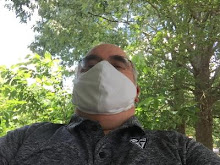
Being neither a scientist nor a medical professional, I really have no idea how effective masks are in combatting Covid-19. I heard on TV the other day the theory that if 60% of Americans wore masks for 2 weeks that could kill off much of the virus. If so, that should certainly be more than enough motivation to do the right thing. And even if that theory were to prove false, there would still be plenty of good grounds to encourage - and even mandate - face coverings in public. So why is it that this practice - admittedly a new and inconvenient change in our customary behavior - has become so apparently controversial, at least among certain segments of the population?

The fact is that, while the actual degree of scientific certainty behind this practice may be open to legitimate debate, in fact rational debate about the alleged medical benefits of covering one's face in public is not what this controversy is really all about. Rather it has become yet another expression of the tribal division of American society - sometimes dignified with the more academic-sounding term "political polarization." 

Whatever one calls it, American society is increasingly divided into two tribe-like groups, whose main basis for group identity and group solidarity seems to be their hatred for those in the other group. Scientific facts and their medical applications, which one might think would be paramount to decision-making in the face of a global pandemic, seem to have a lot less to do with how one views the advice or requirement to wear a mask than which "tribe" one has chosen to identify with. This is tragic, of course, because the virus (like climate change) does not discriminate on the basis of tribal divisions. 

Way back when, most people had multiple overlapping identities ("cross-cutting cleavages" in academic speak). So one could be a factory worker, a union member, a hunter and gun owner, a Catholic, a citizen of California, a male, married, etc. One's political party, probably an inherited identity, would have been one more (but not necessarily any more decisive) group with which one identified. Increasingly, however, political party has become the predominant identity, within which all else is largely subsumed (including in many cases religious affiliation). This is all part of what has been called "the big sort." Given this decades-long development and given the Republican Tribe's intense animus against scientific expertise, it should come as no surprise that the scientific and medical merits of masks in the current COVID-19 crisis have become secondary considerations compared with the primary consideration of which Tribe one identifies with - and how wearing or not wearing a mask has become symbolic of one's tribal identification. 

By ostentatiously refusing to wear one himself, the President has reinforced the mask's symbolic character - continuing the division of our society to its long-term detriment. And so it is that recent research reveals that "Democrats are more than 20 percentage points more likely than Republicans to (75% versus 53%) report wearing masks in public," and that "Mask-wearing levels are consistently lower across the board in states that voted strongly for Trump." (The researchers were political scientists Shana Gadarian, Sara Goodman, and Tom Pepinsky.)

First Things' editor R.R. Reno's recent (and now infamous) extreme tweets and other fulminations on the subject simply illustrate this absurd situation in which those on that side of the partisan divide have abandoned all other perspectives and can see things only through one narrow culture-war tunnel. As Vox's Zach Beauchamp has observed, the question for Reno "is not 'does wearing a mask contribute to public health,' but rather 'what does wearing a mask say about where I stand in the culture war.' He sees the issue not through the lens of substance but of symbolism." 

It is, of course, the insistence of reducing all of life to that narrow culture-war tunnel (with no proverbial light at the end of it) that has brought our politics to this state.


Monday, May 25, 2020

Memento


Sunday's NY Times devoted its front page ("U.S. Deaths Near 100,00, an Incalculable Loss") to listing the names of many pandemic-connected fatalities.

Memorial Day disposes us (or at least used to dispose us before we turned it into just another long weekend summer holiday) to think about those who have gone before us - an occasion to recall those who have die and continue to die in our ongoing apparently interminable wars, and an appropriate occasion (so it might seem) to remember the almost 100,000 Americans (and the thousands of others around the world) whose lives have been cruelly cut short by this pandemic, an opportunity to mourn them collectively as a society, something individuals have been unable to do in anything like a normal way because of the necessary restrictions under which we have been living.

Collective rituals of national mourning are rightly restricted to losses to our common life - the deaths of statesmen, tragic accidents (like the deaths of the challenger astronauts), and casualties of war and terrorism . Our mounting national death toll from COVID-19 comes closest to resembling a long-term terrorist attack - not just the sum of so many individual tragic losses but a wound penetrating deeply into the nation's heart.

In normal times of course, our national leaders would lead us in national mourning. Such mourning, however, as Jessica Goldstein has written in The New Republic, "requires one to pause and remember; this administration is hell-bent on hurtling forward as if what is currently happening never really happened at all." Indeed, the pandemic has only illustrated how our national leaders are themselves a major part of our national illness. "The president's boundless cruelty and ignorance," Goldstein reminds us, have been "enabled by his administration's incompetence ... and avarice ... aided and abetted by staggering civic indifference from elected officials who ran for office on 'pro-life' platforms only to turn around and demand the rest of us be willing to sacrifice our parents and grandparents on the altar of the Dow." 

All the more reason then "to pause and remember," which is what this day is supposed to be for.