Saturday, August 19, 2023

Section Three: Yes and No


The "Section Three," in the title above, refers to the 14th Amendment to the U.S. Constitution (passed by the Reconstruction Congress in 1866 and ratified in 1868). Section 1 of the Amendment famously nullified the infamous Dred Scott Decision, established the important principle of birthright citizenship, and imposed on the states the obligations of "due process" and "equal protection." Section 2 replaced the famous "three-fifths compromise" with one-person, one-vote, and provided penalties (to the best of my knowledge never enforced) for states which deny some citizens the vote. Section 3, which is what concerns us here, states: No person shall be a Senator or Representative in Congress, or elector of President and Vice-President, or hold any office, civil or military, under the United States, or under any State, who, having previously taken an oath, as a member of Congress, or as an officer of the United States, or as a member of any State legislature, or as an executive or judicial officer of any State, to support the Constitution of the United States, shall have engaged in insurrection or rebellion against the same, or given aid or comfort to the enemies thereof. But Congress may by a vote of two-thirds of each House, remove such disability.

The 14th Amendment was adopted to reconstruct the country on a new basis after the crime of secession and the resulting Civil War. Section 3 responded to a particular historical situation. Having served that purpose, is it still relevant? That it remains relevant is the contention of two conservative legal scholars, William Baude and Michael Stokes Paulsen, authors of "The Sweep and Force of Section Three," which can be found at: 
https://papers.ssrn.com/sol3/papers.cfm?abstract_id=4532751

I am not a lawyer, and my modest knowledge of constitutional law is ancient and admittedly minimal. But, for all the legal language and arcane references, the authors' 126-page case is clearly argued and quite convincing. Amendment 14, section 3, is part of the U.S. Constitution and remains fully operative today. Not specifically limited to the Civil War, it applies to any "insurrection or rebellion." Congress in subsequent statutes did use its power to lift the penalty, removing it from those on whom it had been imposed, but it did not prospectively remove it in unknown future cases. The penalty remains in force and has automatic legal effect, like other constitutional disqualifications (e.g., being too young, not being a citizen, or, in the case of  the post-22nd-amendment presidency, having already been elected twice). The authors cite the example of Couy Griffin, an elected County Commissioner in New Mexico, who participated in the January 6, 2021, insurrection. Some New Mexican citizens filed a quo warranto suit seeking his removal. A court heard the case and ruled he had been disqualified as of January 6, 2021, and ordered his immediate ejection from office. The authors explain the many and various procedures provided for removing officials and/or preventing disqualified candidates from running for or being appointed to office. (The authors obviously recognize the likelihood of a court challenge by a candidate disqualified from the ballot on such grounds and the consequent responsibility of the Court to adjudicate such a case applying section 3.) 

The authors recognize the argument that section 3 "seems harsh, unforgiving, undemocratic, unAmerican (?), even ... unconstitutional(!?)." In response, they stress that "amendments change the Constitution." So, to the extent of any conflict between them, they argue, section 3 overrides earlier constitutional provisions, for example, provisions prohibiting Bills of Attainder or ex post facto laws, and mandating due process. Much more problematically, they also argue that, "to the extent of any inconsistency between them, Section Three overrides, supersedes, or satisfies the free speech principles reflected in the First Amendment."

Considered solely as a legal argument, apart from its contemporary relevance and application, I perceive two principal potential problems. The first is that there must be some sort of adjudication of guilt or its equivalent (as happened in New Mexico) to justify removal from office or from the ballot. So, in the contemporary context, it might be one thing to keep off the ballot someone who has been tried and found guilty of some crime related to January 6, and quite another thing to try to exclude from the ballot someone who has not yet been held accountable in any other forum. 

The second problem is the broader societal concern for free speech. I understand that, because it comes chronologically later, in case of conflict the 14th Amendment takes precedence over the First. And I accept the authors' argument that there is a difference between engaging in insurrection and the free speech protected by the First Amendment, that "even under modern doctrine, free speech does not protect categories of speech that overlap with Section Three" and that "Section Three's terms will not often reach pure speech." Still, there seems something a bit too cavalier about the assertion that "Section Three should be construed, to the extent fairly possible, consistently with the free speech principles memorialized in the First Amendment," but that, in case of conflict, "Section Three must control." Are we sure that is what we want?

After some 100+ pages of legal argumentation, the authors apply their argument to the case of Donald Trump and argue - convincingly - that section 3 does indeed disqualify him from future office. "All who are committed to the Constitution should taken note and say so."

So far, so good. That is the "Yes" in the title. I agree with the authors' literal, "originalist" interpretation of the 14th Amendment. But now comes my "No" - not an absolute, definite "No," so much as an alternative political emphasis to be considered along with the legalistic one.

The authors obviously put the constitutional text at the top of their ranking of values. However, there are other values in politics. The U.S. Constitution itself in its Preamble proposes pre-constitutional values in support of achieving which the Constitution was proposed as a means, not presumably as an end in itself. 

In any case, one pre-constitutional political value is democracy. Following aspects of the classical political tradition and the creative theorizing of my grad school professor, Sheldon Wolin, I value democracy not just as a system of elections but as a more total political experience in which ordinary citizens are empowered to participate as true political actors. That said, what is at issue here is elections - that is, the right of citizens to choose those to be entrusted with public office. (It is in support of this value that I have always opposed term limits and disapprove of the 22nd amendment.) 

Electoral democracy is not an ideal or perfect form of government. The U.S. has been incredibly lucky in that elections have produced Thomas Jefferson, Abraham Lincoln, FDR, and Joe Biden, when the same system could conceivably have elected Aaron Burr, John Breckinridge, General George McClellan, and Charles Lindbergh, or re-elected Donald Trump. Yet, notwithstanding religious, right-wing, integralist fantasies, the alternatives actually on offer in the modern world to a system of democratic elections are all worse.

Trump, et al., in their efforts to subvert the 2020 election attacked some of the bedrock principles of a system of democratic elections. They thus eminently deserve the corresponding legal sanctions, including the application of the disqualifying clause of the 14th Amendment.

That said, there remains a case for "No."

The current criminal prosecutions of the prospective Republican presidential candidate have already taken our country into dangerous territory. True, the system survived the Wilson Administration's prosecution of minor party opponent Eugene Debbs.  It may well survive the Biden Administration's prosecution of its principal political opponent, but how well and at what cost? I am no expert in Israeli politics. I cannot help wondering, however, whether the current crisis in Israel might have been avoided or at least taken a less dangerous turn if the legal system had not insisted on trying to prosecute the Prime Minister. Will Israel be better off because the Prime Minister must make alliances and pursue many unpopular policies in order to circumvent possible prosecution? Perhaps, but perhaps not.

So, while the authors' conservative, constitutional, originalist, textualist argument in favor of using section 3 to disqualify Trump's candidacy may be legally correct, it may yet prove politically problematic in ways which will further undermine our democratic system rather than support it.  The fact that Trump may be the preferred choice of a significant minority of American citizens speaks volumes about aspects of American society that I believe are radically wrong. But I do not see how depriving those citizens of the right to vote for the candidate of their choice in the long run corrects any of those wrongs. I remain convinced that the best way to exorcise the Trump factor from American politics is a decisive electoral defeat.

Of course, the case for applying section 3 remains legally compelling. Thus, in The New Republic, Matt Ford has endorsed the authors' argument. As that argument becomes better known, I imagine many more will do so as well. It is an argument that speaks powerfully to an important current in American political thought. On the other hand, there is that other current to which I have referred above. Thus, in The New York Times, Ross Douthat has argued that, even if the authors' argument "were deemed correct on some pure empyrean level of constitutional debate ... their correctness would be unavailing in reality, and their prescription as a political matter would be so disastrous and toxic and self-defeating that no responsible jurist or official should consider it." Douthat considers not just the fact that many American voters have preference for Trump, as I noted above, but also the particular political context and background for that preference. "The idea that the best way to deal with a demagogic populist whose entire appeal is already based on disillusionment with the established order is for state officials — in practice, state officials of the opposing political party — to begin unilaterally excluding him from their ballots on the basis of their own private judgment of crimes that he has not been successfully prosecuted for … I’m sorry, the mind reels." 

Mine too! No legalistic argument will likely carry much weight with people who are already disillusioned by and cynical about the system and the elites who operate within it. (The authors are admittedly conservative, but they remain conservative elites, separated by a yawning cultural gap in the real world from most of the MAGA folks who follow Trump.)

Meanwhile, the train has already left the station on the Trump prosecutions. The fantasy that "no one is above the law" will be neither more nor less true when this is all over. What will be the actual consequences remains yet to be seen. But, to quote Douthat again, "to try a man, four times over, whom a sizable minority of Americans believe should be the next president, is an inherently political act. And it is an especially political act when the crimes themselves are intimately connected to the political process, as they are in the two most recent indictments."

Perhaps, one light at the end of this tunnel may be provided by the fact that the Georgia prosecution is a state case. It may yet be transferred to federal court because of a certain arcane legal doctrine. Assuming, however, that it remains in state court, then it could be televised. That could, of course, degenerate into a circus, another O.J. trial. But it could also offer all citizens - including those enclosed in completely self-referential, ideological and informational bubbles - a rare opportunity to experience the event directly, unfiltered by FOX (or, for that matter, MSNBC). Watching the trial unfold, watching the evidence being presented, defended, refuted, the way the jury will watch it, may be an eye-opener for many and may (I dare not say "will," but it "may") by sheer evidentiary experience permit reality to break through the preconceived polarities of our politics. 

Perhaps.

Thursday, August 17, 2023

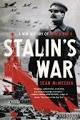
Stalin's War (The Book)


If anything, the Oppenheimer movie has increased interest in all things World War II, already a focus of so much attention and the topic of so many books. This summer, I have read Sean McKeekin's  thought-provoking Stalin's War: A New History of World War II (NY: Basic Books, 2021). The "new" in the subtitle refers not just to its being yet another massive (666 pages of text plus another 100 or so of notes) study of the war, but to the way it untypically centers its narrative on Stalin and the Soviet Union rather than on Hitler and Germany or on the Western Allies (U.S. and U.K.).  It challenges the preferred Western narrative that focuses on the Allies "Good War" against Hitler and the Nazis, with a resulting happy ending for the U.S. and Western Europe at the war's end. In contrast, as is well known, not only did a disproportionate amount of fighting and dying happen on the eastern front, but there was no real happy ending in the east. "For subjects of his expanding slave empire, Stalin's war did not end in 1945. Decades of oppression and new forms of terror were still to come," concludes McKeekin on the last page of this book.

That Stalin emerged as the big winner from World War II there can be no real doubt, despite the terrible losses the Soviet Union suffered, especially between June 1941 and June 1944 when Soviet soldiers (and civilians), admittedly aided and provisioned by the U.S. and Britain, served as cannon fodder in place of Western soldiers. And the Soviet Union emerged from that war with significant gains in Asia as well, where it had not been engaged against Japan until the end (and where, in fact, Stalin in his neutrality had effectively been an aid to Japan against the U.S. and Britain). Obviously, the U.S. also won the war. Indeed, the U.S. emerged from the war almost unscathed and immeasurably enriched and empowered, unlike Britain which was nominally victorious but effectively diminished. The U.S. clearly emerged as the war's principal victor and the dominant and most powerful country in the world. And, just as clearly, it remains difficult still today to imagine any alternative scenario in which the Soviet Union would not have emerged as it did, as the only other serious, post-war Great Power.

What is especially interesting about McKeekin's work is how he forces the reader to approach the war from Stalin's perspective. From the beginning, Stalin got a lot of what he wanted. The war itself was something Stalin probably wanted more than Hitler. He had hoped for a catastrophic conflict between Germany, on the one side, and Britain and France, on the other, each imperialist capitalist country diminishing the other. Instead, however, he got a relatively quick German victory, which was inevitably a threat to the Soviet Union. As for Poland, which had always been a threat to Russia and had been until recently a quasi-ally of Germany, the infamous 1939 pact between the two dictators had been as much Stalin's initiative as Hitler's and had originally served Stalin's interests even more than Hitler's. Stalin took more of Poland than Hitler did, while waiting to enter the war until Hitler had effectively defeated Poland, thus enabling Stalin to preserve Russia's "neutral" status. Hitler remained very dependent on Stalin for materials. Meanwhile, Stalin was able to expand his empire into the Baltics. His only mistake was in Finland, an adventure which almost (but didn't) provoke a war with the West.

The author treats all of this in great detail, together with Stalin's most notorious war crimes (e.g., Katyn). He is somewhat guarded in his appreciation FDR's wartime policy toward Stalin (as Churchill himself eventually became), and is particularly dubious about Harry Hopkins and some of FDR's other interlocutors with Stalin. FDR was also more generous to Stalin than to Churchill, who was effectively forced to mortgage the British Empire to the U.S. FDR's politically and morally dubious policy of "unconditional surrender" (which was his idea not Churchill's) was intended to assure Stalin of Western seriousness, a pledge that the West would not negotiate a separate peace with Germany. (Meanwhile Stalin himself made overtures for a separate peace with Hitler!) Personally, I have long doubted the desirability of the "unconditional surrender" policy. Politically, of course, Truman could hardly have reversed FDR so soon even had he wanted to. Had he been able to do so, however, perhaps the Soviet involvement in the Pacific Theater could have been avoided. 

One can imagine how different decisions on this or that matter might have made some marginal difference in the final outcome. On the other hand, as always when engaging in revisionist history or any sort, the question remains what was the alternative? What outcome could there have been instead? 

The U.S was extremely generous in its aid to the Soviet Union. Had we not been so generous, however, would the Society Union have been able to win the war on the ground for us in Europe as it finally did? Yes, FDR should have pressed Stalin to start a second front against Japan - just as Stalin constantly pressure the allies to do so in Europe. In the end, however, that might well have given Stalin even more leverage in Asia than he got. And, on the traditionally most controverted outcomes (e.g., Poland), it is hard to imagine the map of Europe turning out that much differently.

But maybe the point is not so much to imagine an alternative outcome as to recover a more accurate picture of the past. It is helpful to re-travel this familiar territory with a focus on what Stalin wanted and what Stalin got, instead of the more usual emphasis on FDR's and Churchill's response to Hitler - as if they alone were the primary actors and Hitler alone the primary villain. 


Tuesday, August 15, 2023

A Very Special Day


"To day is the holy day of the Assumption of the dear blessed Mary other of our Lord and Saviour Jesus. Oh may I be found worthy of her regard and love." So wrote the then 24-year old Servant of God Isaac Thomas Hecker in his Diary on August 15, 1844, exactly two weeks after his entry into the Catholic Church.

La Madonna di mezz'agosto was how my Sicilian grandmother used to refer to today's festival of the Assumption (typically termed the "glorious" Assumption) of the Blessed Virgin Mary, which has been celebrated on this same date for so many centuries.

Early on in American history, the Assumption received special attention and solemnity in the newly created the United States as the patronal feast of Baltimore, the first U.S. diocese (then encompassing the entire territory of the new country). In his first pastoral letter to his extensive American diocese, Bishop John Carroll called on all U.S. Catholics to celebrate the feast: "to unite with one heart, and in one earnest supplication to the father of all mercies, and the giver of every good gift, through the intercession of the Blessed Virgin, that he may be graciously pleased to preserve, increase, and diffuse a sincere and well-grounded attachment to the principles of our. holy religion; to advert from us the seduction of error and pestilential infidelity; to awaken and renew in us the spirit of solid piety, and of watchfulness over your unruly passions; to animate us to the fulfilling of all the commandments; to pour down on our country blessings spiritual and temporal; and to receive our grateful and humble thanks for the innumerable favors, which we continually receive from a Bountiful Providence." 

Certainly, that remains a worthy prayer agenda for this happy feast in our own troubled time as well!
Early traditions saw Mary's death (her "Dormition") as an extraordinary event. It is thought that traditions about Mary's "Dormition" and her accompanying Assumption can be traced as far back as the 2nd century. According to one of the most influential accounts, Mary's life ended in Jerusalem and she was buried there by the apostles. Thomas, however, was characteristically absent. After his late arrival, the tomb was reopened and found empty, as a result of which the apostles believed her to have been taken up ("assumed") into heaven.  According to Saint John Damascene (c.675-749), Saint Juvenal,the Bishop of Jerusalem,  recounted this to the emperor at the Council of Chalcedon (451).
Whatever may be inferred from these narratives, Eastern Orthodox Christians affirm that, after Mary had died a natural death, her final resurrection was anticipated and she was carried completely, body as well as soul, into the glory of heaven. Accordingly, they celebrate the Dormition of Theotokos on August 15, preceded by a strict 14-day fast. Roman Catholics likewise affirm faith in Mary's body-and-soul assumption and celebrate it on the same date (although without any preparatory fast). Catholic teaching, now formally dogmatically defined by Pope Pius XII in 1950, leaves it an open question whether Mary actually died and was then raised up to heaven or whether she was directly assumed into heaven without having died first.

In 1946, Pope Pius XII, in a letter to the world's bishops Deiparae Virginis Mariae, asked them:
"Do you, venerable brethren, in your outstanding wisdom and prudence, judge that the bodily Assumption of the Blessed Virgin can be proposed and defined as a dogma of faith? Do you, with your clergy and people, desire it?" To this inquiry, the Pope received an unsurprisingly resounding response, which he characterized as "outstanding agreement of the Catholic prelates and the faithful." This showed, the Pope claimed, "the concordant teaching of the Church's ordinary doctrinal authority and the concordant faith of the Christian people which the same doctrinal authority sustains and directs" (Munificentissimus Deus, 12). 

Those were the days! Try to imagine such concordance in the conflict-ridden factionalized Church of today! Try to reimagine the missionary self-confidence and future-oriented hopefulness expressed in that Holy Year of 1950, in the papal bull defining the by-then fully accepted Catholic doctrine.

Preaching at the Sixth national Marian Congress of France in July 1950, the Papal Nuncio to France, Archbishop Angelo Roncalli (Pope Saint John XXIII) composed this prayer:

O Mary, Mother of Jesus and our Mother too! We hail you with this cry that all generations repeat, contemplating the mysteries of your life and the splendor of your Assumption. Once more we hail you as blessed, beata; intercede for us, O glorious Queen of the world and be ever mindful of us, particularly in the dangers and needs of the present hour.

Photo: The Crowning of Mary, Queen of Heaven, Mural by Willian Lauren Harris, Saint Paul the Apostle Church, NY.

Saturday, August 12, 2023

August


World War I (as a European as opposed to purely Balkan conflict) began in August. So did World War II. (Technically, World War II began September 1, but the immediate run-up to war and the Molotov-Ribbentrop pact which made war inevitable both happened in August.) Also the Berlin Wall went up in August, and more recently Richard Nixon resigned under pressure in August. So it is obviously nonsense to say that nothing much ever happened or happens in August.

Still, August has long had an auspicious aura about it as the vacation month par excellence. The tradition of August as the holiday month has long been established in Europe. Indeed, it probably goes all the way back to the Romans. The notorious Italian Ferragosto is derived from the Latin Feriae Augusti, established by the Emperor Augustus in 18 BC to celebrate the completion of the harvest and offer a time of rest at the end of its challenging agricultural work. All this fell in the old "sixth month" Sextilis, since renamed in honor of the Emperor Augustus (with an added thirty-first day to make it equal to July, named after Augustus' uncle Julius).

The ancient imperial festivities included horse races, a tradition which survives most famously in the Palio held in Siena on August 16. (Palio is from pallium, a band of fine cloth which was a prize for winners of ancient Roman horse races.) Modern Ferragosto is associated with holiday excursions to the seaside or into the mountains, known as "gita fuori porta,a practice popularized in modern Italy by the 20th-century Fascist regime. 

In the world of un-air-conditioned homes and schools and workplaces in which I grew up, July and August were the recognized holiday months, bounded by the end of school in the last week of June and the resumption of school on the Monday after Labor Day. That pattern largely still persists here in the northeast. August still falls in the vacation season in these parts of the United States, although in many other states school has already resumed, thus shifting the school year's "summer vacation" from July-August to June-July. During my 10 years as a pastor in Tennessee, I learned to treat August 1 as the beginning of the annual work cycle. But the continued observance of Labor Day as an "end-of-summer" celebration reflects the persistence of that more traditional mindset - although increasingly even colleges and universities resume classes before rather than after Labor Day. That was already true for me in seminary, when classes already resumed at the end of the month. Even so, early to mid-August was spent at Lake George in NY's Adirondack region, a traditional summer retreat from the pre-air-conditoning era. (The above photo from across the lake was taken several years later in October 2009.)

Of course, in today's frenzied world of texts and emails that require immediate response and so keep us forever at work wherever we may be physically, pining for August relief from routine may seem almost Luddite. Yet, just as human beings need a weekly sabbath-like day (another enrichment of human life that has almost entirely vanished in just my lifetime), people do need August or something like it in their lives. More work may be getting done than ever before. People may be more productive than ever before. But to what end? And to whose benefit?

Thursday, August 10, 2023

Afire (The Movie)


Afire, which I saw at the Lincoln Center-Elinor Bunin Munroe Film Center, is the English title for the German film Roter Himmel (literally "Red Sky"), the work of director Christian Petzold. It follows a seemingly social awkward, apparently unfriendly, somewhat clueless, boorishly arrogant, chain-smoking Leon, who is a young aspiring writer, currently working on the unfortunately titled "Club Sandwich." With his much more easy-going and better looking friend Felix, an aspiring photographer, the two have retreated to a beach-house owned by Felix's family on the Baltic Sea near Ahrenshoop. It is a beautiful place, its perfection marred only by Leon's bad manners and the increasingly frightening forest fires nearby. The two expected to be there alone but find that Felix's mother has, without warning him, also let the place out to Nadja, a literary criticism Ph..D. student, currently a seasonal worker selling ice cream at the beach. Spending the nights, first with her and then with Felix, is Devid, a "rescue swimmer," i.e., lifeguard. (The peculiar spelling of Devid's name is ascribed to an old GDR quirk.) 

Petzold has suggested he has been inspired by American and French coming-of-age stories set in summer at the beach. The film follows the four over the course of a few days, toward the end of which they are visited by Leon's publisher Helmut. The narrative unfolds simply. Felix swims, repairs the roof, and takes pictures for his portfolio. Dinners get prepared and shared. Nadja bikes to and from her work at the beach. David hangs around and helps Felix fix the roof. And Leon largely sulks, dissatisfied with the behavior of the others, above all dissatisfied with himself and his unsatisfactory literary output, a dissatisfaction he ineffectively seems to try to take out on everyone else around him. The simple narrative serves as the context for an intriguing character study, as each of the characters turns out to be more than he or she seemed at first.

Meanwhile, the forest fires approach closer, and terrible tragedy ensues, from which eventually emerge better writing and true love.