Friday, December 17, 2021

Person of the Year?


In his Theory of Moral Sentiments (1759) Adam Smith wrote: of the "disposition to admire, and almost to worship, the rich and the powerful, and to despise, or, at least, to neglect persons of poor and mean condition," which he called "the great and most universal cause of the corruption of our moral sentiments." He continued: "That wealth and greatness are often regarded with the respect and admiration which are due only to wisdom and virtue; and that the contempt, of which vice and folly are the only proper objects, is often most unjustly bestowed upon poverty and weakness, has been the complaint of moralists in all ages."

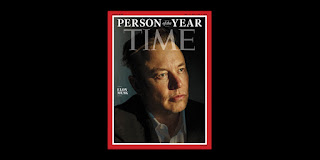
I don't typically get excited about Time Magazine's choice for 'Person of the Year." I suppose if I had to pick someone for that honor for 2021, I might perhaps pick someone like Dr. Anthony Fauci, the public face of our public health fight against the deadly covid pandemic, or perhaps the Capitol Police who courageously protected Congress on January 6 and so saved American constitutional government (at least until the next election), or perhaps the state and local election officials who resisted Republican attempts to corrupt and subvert the electoral process and so saved American constitutional government (at least until the next election). All of the above would have been excellent selections. Instead what did Time do? Whom did Time choose?

Elon Musk may be a creative entrepreneur, and I can understand that that may impress some (maybe many) people. That is yet another notorious instance of what Adam Smith so poignantly described - respect and admiration which should go to wisdom and virtue going instead to wealth and the power that accompanies excess wealth.

Do we really need to see yet another rich capitalist honored? Doesn't wealth already have too much power in our society? Hasn't this pandemic highlighted how much damage is being done by inequalities in wealth? What kind of world does such a selection suggest? I fear it portends a world we do not need and should not want!

Wednesday, December 15, 2021

A Christmas Carol - and Other Christmas Stories


Christmas is now a mere 10 days away. So, last week, I watched (as I do every year) the black-and-white 1951 film version of Charles Dickens' 1843 Christmas classic, A Christmas Carol, starring Alastair Sim, which was my father's favorite film version of Dickens' story. (Interestingly, it was originally something of a commercial flop in the U.S., but it soon became a standard staple of holiday TV, which was where I first encountered it.) I am also very fond of the the 1938 film adaptation starring Reginald Owen, which, however, does deviate more from Dickens' original.


I’m guessing that everyone has his or her favorite Christmas movie – A Christmas Carol, It’s a Wonderful Life, The Bishop’s Wife, How the Grinch Stole Christmas, etc. I guess mine is Miracle on 34th Street - for the very personal reason that I owe my existence to Macy’s.  My parents were both employed by Macy’s in the autumn of 1946 when they met there at a soap sale – the first big soap sale since the end of the war. For my father, it was love at first sight. Soon he was taking my mother on their first date – to the Radio City Christmas Show. They were engaged just before Christmas, and were married two months later. As Macy’s employees, my parents (along with many others) sat under the lights for what seemed like forever as part of the invisible background crowd for the cafeteria scene in Miracle on 34th Street, when Kris Kringle came face-to-face with the insidious power of post-war psychological correctness.


Christmas movies often feature otherworldly kinds of characters – Charles Dickens’ famous spirits of Christmas Past, Present, and Future, for example. In Miracle on 34th Street Kris Kringle may indeed be Santa Claus, but he lives in a residence for senior citizens on Long Island. While he accomplishes a tremendous transformation in the people who get to know him, he does so in quite an ordinary, human way – by doing the sorts of good things those other people would never have done had it not been for his presence in their lives.


At the main Mass of Christmas, the Mass on Christmas Day, the Church prays that we may share in the divinity of Christ, who humbled himself to share our humanity. Like Kris Kringle, but to an infinitely greater degree and on an infinitely grander scale, Jesus Christ, the Savior of the world, whose birth we will soon celebrate at Christmas, changes the lives of all who will let him. He reveals what it means to be human and enables us to be and to do what we would never have been or done on our own, had he not become one of us. He reveals what it means to be God and enables us to be reconciled with the God who is so in love with us that he has chosen to be one of us. The Christmas story is the story of God’s own Word, becoming what he himself had created, truly God and truly human, Emmanuel, God-with-us. This is the Christian faith, which we profess, proclaim, celebrate, and share with the world at Christmas and all year long.


Photo: Charles Dickens, A Christmas Carol, first edition cover, 1843.


Tuesday, December 14, 2021

Notre Dame


Two and a half years ago, after the tragic fire that almost destroyed the historical and cultural treasure that is the medieval Gothic cathedral of Norte Dame de Paris, President Macron (whose secularist State owns the cathedral as a result of the French Revolution's thievery) committed the French State to restore the cathedral in time for the 2024 Paris Olympics. That target date dangerously suggested a prevailing sense of Notre Dame as primarily an historical and cultural tourist site (which, of course, it is) rather than primarily a place of worship (its original and primary purpose). In any case, the commitment was made. And, after some frighteningly modern alternative suggestions, the commitment was also made to restore the exterior to more or less what it had looked like before the fire. 

Recently, however, a new controversy has since erupted about the restoration/renovation of the interior of the church. Last week, the Archdiocese of Paris presented its proposal for the redevelopment of the cathedral's interior to the National Heritage Commission. Prior to that some aspects of the proposal had been leaked creating the new controversy, predictably horrifying many in this age when every initiative is immediately politicized), with some denouncing the Church's proposals as a sort of Dysney-like transformation of the cathedral. The ultra-right presidential candidate Eric Zemmour, who is not a Catholic, not even a lapsed Catholic, but a non-Christian atheist, has unsurprisingly weighed in to denounce the proposed plan, which he has characterized as an "appalling endeavor aiming to completely alter the world’s most visited structure, the center of gravity of French Christendom and the symbol of our nation."

Let me stipulate at the outset that I do not fully know or understand all the details of the archdiocesan proposal and so am in no position personally to endorse or oppose them. According to Bishop Eric Aumonier, who is the archdiocesan spokesman for the cathedral's restoration proposal, the Church's plan is to make the place and its liturgical life "more readily understandable to tourists," in his words, "not to transform the cathedral but to continue to pray with all the faithful while offering visitors who want to visit the building the means to understand what is lived inside."

Aumonier claims a commitment "to maintain the sacred dimension of the cathedral," but to alter the way in which visitors experience their passage through the building "to allow people to discover what the Christian itinerary is in a church, to understand why there is a big cross, why people bow down in front of it, why the crown of thorns is honored."

Again, I am not completely clear what the exact impact of the proposed changes would be. Nor am I clear why, whatever alterations the archdiocese may feel compelled to make to accomplish its laudable goals, why the archdiocese could not be satisfied with such more obvious and presumably less controversial steps as, for example, providing an easily accessible app for all visitors to download during their tour to explain to them what the Archdiocese wants to explain to them about the cathedral. 

That said, it seems evident that there are at least three constituencies involved in this conflict - all of whom probably deserve to be taken seriously.

Opposing the plan are, obviously, historical and cultural traditionalists who may care little or nothing about the religious life of the building but who do care quite a lot about its history and its beauty. These are not negligible considerations for human beings, who are inevitably immersed in history and moved by beauty. (Whether Zemmour actually cares about history and beauty or is just looking for an explosive issue is not the point, Plenty of people clearly do really care about those things.) So that first, secular constituency's concerns certainly do deserve to be taken seriously.

Fifty-two years ago, in his monumental TV series Civilisation, Kenneth Clark stood on the bank of the Seine River and asked, “What is civilisation?” Answering his own question, he then said "I can't define it in abstract terms, but I think I can recognize it when I see it.” As he did so, he turned to what was behind him across the River, the Cathedral of Notre Dame de Paris, and continued, “I’m looking at it right now.” That is why, the 2019 fire was such a serious blow, both historically and culturally, to our imperiled Western civilization. It is no accident that distances within France are marked from kilometre zéro at Notre Dame! But we live now in an increasingly post-modern, secular society, which aptly expresses its spiritual emptiness and its inhuman ugliness in soul-destroying inhumane, ugly buildings, which reflect the diminished character of contemporary human aspiration. The age of the great cathedrals was limited and imperfect in many ways, but at least it directed human hearts and minds to look upward as opposed to our contemporary preoccupation primarily with our petty selves.

Unlike that first group, a second constituency understands and appreciates Notre Dame not solely or primarily as a living museum of history and culture but for what it was built and meant to be and still is supposed to be - a Catholic cathedral, a place set aside and consecrated for the worship of God. Obviously, that does not contradict a concern for history and beauty. In fact this group generally values the importance of beauty in worship and recognizes the participation of the present in a long history of Christian culture and European civilization and is accordingly suspicious of ecclesiastical efforts at renovation. Too many times - especially in the last 50+ years - have holy places been wantonly trashed in the name of a pernicious presentism. That experience serves for many in this constituency as a sort of warning, which makes many people who genuinely appreciate the primarily religious character of the site nonetheless suspicious of any ecclesiastical modernizing renovations at liturgical sites.

The third constituency is that represented by the Archdiocese of Paris, with Bishop Aumonier as spokesperson. This group cares primarily (not necessarily to the exclusion of historical and cultural considerations) about the spiritual significance of Notre Dame as the center of the local Church and its primary place of liturgical worship. It is in fact true that many of those who visit Notre Dame as tourists have no understanding whatever of what the building is actually for. A Church committed to evangelization should welcome such tourists but also invite them to some minimal understanding of why Catholics built such a beautiful church and what we still do in it. Neither for the diocese nor for the Church Universal can a cathedral ever be only an historical monument or a masterpiece of artistic beauty. It is primarily a sacred place, and that reality must somehow be conveyed, although hopefully not at the cost of undermining history or destroying artistic beauty. 

So all sides in this dispute have valid points, but the Church community for whom the cathedral remains a place of living worship rightly has a primary interest in highlighting the cathedral's religious purpose, which was also its historic purpose and the purpose which inspired its builders to make it so beautiful. Even so, since all elements have legitimate interests, all should somehow be expected to collaborate together to allow the Church to express its proper religious purpose without compromising its links with the past or its inherent beauty. Since the French State owns the building, it falls to the State to properly prioritize the reconciliation of these superficially conflicting but in fact compatible claims.

Photo: Catholicnewsagency.com
Monday, December 13, 2021

Succession's Third Season's Diabolic Finale


Just two months ago, Succession's third season started off with Kendall Roy (Jeremy Strong, sensationally profiled this past week in The New Yorker) flying high (too high, Icarus-like?) and at last threatening to bring down his hateful father and his family's evil empire, both of which seemed literally on the run. But only briefly! Logan Roy's apparently infinite malevolence and the corrupt nexus of his evil wealth and Republican party politics appeared to have salvaged the situation for the company, for Kendall's increasingly conscience-less siblings, and for the evil mastermind, Logan himself. And, as Succession does so well, the trajectories of the major characters advanced and fell in their vain competition for power (and Logan's love) throughout the season. 

Among the siblings, Shiv (once a serious possibility to replace the hapless Kendall as heir apparent) showed herself as just not quite up to the challenge (apparently also taking her never model marriage even further down with her). Connor seemed to be undergoing some sort of transformation from comic character to tragic. Kendall, hopelessly deluded by his self-image as a good guy, still hopelessly substance-addicted, and still unable to form a real relationship with the only people who really do seem to have loved him (Rava, Iverson, and Sophie), slowly but surely has undermined whatever advantages he might have had at the season's start. By episode 8, he seemed both totally defeated and aware of it, even ready to surrender. But, of course, even that proved impossible, because of his cruel father's need not to set him free.

The only one who seemed steadily to be advancing - in the process becoming more and more like his father - was Roman, until his sexually perverse text intended for Gerri was inadvertently misdirected to Logan, potentially precipitating Roman's own dramatic fall. For a moment, that appeared to be the cliffhanger set-up for the finale, until - in a brilliant surprise move, the episode ended with Kendall alone face-down in the pool, possibly as dead or dying physically as he has been dying relationally and emotionally all season.

Well, Kendall didn't die, having (we're told) been rescued by Comfry. So, instead of a funeral, the finale opens with Logan improbably reading a children's book to Iverson, while the siblings and their others play (of all things) monopoly. Kendall comes back from his overnight at the hospital as much of a wreck as he was before, seemingly inspiring some modest demonstrations of affection from his siblings and an "intervention" of sorts. Meanwhile, Caroline's crazy wedding to the scholarship boy who bought his own furniture (in other words, someone socially beneath her) goes on as planned, and Shiv even makes a bizarre toast referencing her own failing marriage. How much it has failed she does not yet realize! At the same time, Logan and Roman return to Lake Como to continue negotiating with Matsson, who more and more resembles the son Logan might wish he had, and who, as it turns out, has decided he wants to buy Waystar himself. Unceremoniously dismissed and sent back to his mother's wedding while Logan continues to negotiate with Matsson, Roman should have recognized that, from there, the road to disaster will be direct.

The siblings' "intervention" fails when Kendall opens up about how it felt for him to lose what he had expected to get as the "eldest son" - only to trigger the actual eldest son Connor's anger and resentment. Does Connor's lifelong marginalization in some way foretell the fate of his half-siblings? Meanwhile, for whatever reason, Willa now accepts Connor's marriage proposal. "How bad can it be?" she somewhat unromantically responds to his proposal. Of course we all know by now how much worse it can in fact get!

With Logan and his machiavellian minions away from the wedding to negotiate the deal that would presumably make Logan even more unneeded billions but destroy any of his children's hopes for succession to his throne, Shiv corals Kendall and Roman to react. Kendall still seems to be too much of an emotional mess to care. But the sight of the waiters dumping the garbage triggers whatever shred of conscience he has, surfacing his memory of his greatest crime, which he finally amazingly confesses to Shiv and Roman, who somewhat performatively offer some sympathy (to the extent these damaged characters can). But Shiv quickly brings them back to business, and Kendall accordingly agrees to accompany them to confront their father, on the way explaining to them that their mother, in her divorce settlement, had protected their future by enabling them to deny their father the votes needed to approve this deal. Have they forgotten that in her infatuation for her worthless but ambitious new husband Caroline had already favored Logan over Kendall at the wedding?

Perhaps the most emotionally riveting part of the finale is that car ride and what follows, as the three siblings slowly unite against their father (the thing they failed to do in the first episode of the season), although even at this late date Roman remains torn and seems an uncertain ally almost until the end. But, when they confront their father, they find that he has already been tipped off to their plan and has already gotten his ex-wife's support against her children. The season ends with the three united as never before, but (like Kendall at the end of the first two seasons) seemingly lost, while Roman pathetically pleads with his father and with Gerri, only to be rejected by both.

Throughout the entire series, Logan has always held the real power. His privileged children, who falsely believe in their own security, think they can outsmart him (and one another), but they always fail. Shiv too thought she could play Logan to her hapless husband, only to have him too turn stunningly on her at the end. Tom's Logan-like relationship with Greg (his "Sporus"), which sometimes seemed almost as if it were comic relief, ends up a tragic signifier for the whole story. "Do you want a deal with the devil?" Tom asked Greg, who summing up well what he has learned from his depraved family, answered, "What am I gonna do with a soul anyways?"

Literally everyone in this extended family had made such soulless deals with the devil. That is what wealth does.


Sunday, December 12, 2021

Advent with Alfred Delp (Week 3)


Today is Gaudete Sunday, which, according to the liturgical dynamic of Advent, propels us toward rejoicing. That must have been a problematic expectation for Fr. Delp and his congregation in 1940s Munich - and even more so for Fr. Delp himself imprisoned in Berlin in 1944.

In 1941, the Gospel appointed for for Gaudete Sunday was still John 1:19-28. In the questions posed to John the Baptist, Delp discerned "the temptation which comes over anyone who is any kind of public figure whom the people follow!" And he warned against such seductive suggestions, when history's leaders, "not content with the laurel wreath of greatness, but wanted to take the diadem of the Messiah, the proclamation of salvation, the ultimate jurisdiction for themselves as well." Delp mentioned Alexander, Caesar, and Napoleon by name. He left unnamed other obvious contemporaries of his, whom it would have been too impolitic to mention by name. "Instead of salvation they brought disaster, because they were not honest enough to confess to themselves and to others: 'No.' The cornerstone of every such confession is modesty, and the knowledge of limits and of areas of responsibility."

In John the Baptist's humbly aware self-knowledge, Delp discerned an imperative for all: "One day, when we stand in the presence of the Absolute, this question will cut through our existence like a lightning bolt and manifest what is real and what was masquerade. If we are honest, even now, it sometimes must shudder through our being that the question, 'Who are you?' will be posed to us. This lightning bolt examination will not only pose the question from without, through those who will ask us and who do ask us every hour. It will not only address our work, our word, and our allegiance. It will address our very selves. 'Who are you?'"

A year later, preaching again in Munich for this Sunday, Delp highlighted the traditional Advent themes most familiarly associated with this Sunday, starting with the collect which was then in use Lord, make bright the darkness of our minds. Light and joy, the leitmotifs of Advent and Christmas, even in time of war! "Will the image of the Lord’s blessing shining through this people be fulfilled once again, or will the curse of despair smother us?" Delp asked.

Surprisingly (to our worldly way of thinking), Delp's most extensive reflection on joy came in 1944, in a lengthy meditation for this Sunday composed in prison in Berlin. But then we should recall that Saint Paul was perhaps in prison himself when he composed today's familiar exhortation to rejoice. What was decisive for Delp was his recognition that "Joy in human life has to do with God."

Thus, "The conditions for true joy have nothing to do with conditions of our exterior life, but consist of man’s interior frame of mind and competence, which make it possible now and again for him to sense, even in adverse external circumstances, what life is basically about." 

Obviously, none of us have experienced "adverse external circumstances" quite so adverse as Delp in prison awaiting execution by the Nazis. Nor should we engage in superficial comparisons - such as between the genuine inconveniences caused, for example, by covid lockdowns and the exponentially greater adversity experienced in prison. On the other hand, Delp's prison meditations may have perennial value for us precisely to the extent that we an identify with his experience enough to recognize the real constraints constricting our own lives at a foundational level.

Thus, in Fr. Delp's lengthy Gaudete Meditation in prison in 1944, he asked the obvious question: "Is joy not among those luxury items of life that have no place in the meager private area tolerated in wartime conversations?" And accordingly found an answer: "that is the decisive word. Joy in human life has to do with God." This in turn led to a further question: "How should we live so that we are capable—or can become capable—of true joy? This question should occupy us more today than it has in the past. Man should take joy as seriously as he takes himself. And he should believe in himself, believe in his heart and in his Lord God, even through darkness and distress—that he is created for joy. This really means that we are created for a fulfilled life that knows its meaning and is certain of its capabilities."

Again, inspired by today's traditional epistle (Philippians 4:4-7), Delp reflected further on the reason for Christian Advent joy: "'Dominus propus est—the Lord is near' tells us He is the God of personal nearness. The theological truths about providence and guidance, about the ever-presence of God, and about His merciful indwelling in us must become concrete, lived possessions. Then we will succeed in living through the experiences and events of workdays and holidays, of bright hours and dark hours, right up to that central point at which God reveals Himself as their deepest meaning." Delp related this personal nearness of God to the traditional language of indwelling: "The life of God is lived within us, within the deepest center of our being. Man becomes truly himself precisely at the point where he recognizes that the highest and brightest Being dwells within him."

At the same time, the Gospel account about John the Baptist highlighted for Delp the call to clarity and personal honesty, warning against the "false and foolish" obscuring of human limitations: "So instead of expanding his boundaries through sincere watchfulness and authentic exertion, man oversteps them. Overstepping boundaries on the ultimate level of being, however, is deadly." Thus, "The theological principle that a man, by his own strength, cannot even sustain the basic ethical level of natural principles is the rationale for the misery that we are living through today."

Finally, in the midst of all these challenges and all that is going wrong in our world, today's liturgy of Advent joy challenges us to recognize "Our distress does not die there, but the worry does."