Sunday, March 13, 2022

Listen!


An ancient Christian tradition placed the mysterious event we call the Transfiguration [Luke 9:28b-36] 40 days before Jesus’ crucifixion., which may be one of the reasons we celebrate the feast of the Transfiguration on August 6 – 40 days before the feast of the Holy Cross – and also why we traditionally hear an account of it early in Lent each year.


Of course, the Gospel says nothing at all about how much time actually elapsed between the Transfiguration and Good Friday. We do know, however, that it occurred soon after Jesus’ 1st prediction of what awaited him in Jerusalem. Situated as a sequel to Jesus’ prediction of his Passion, the Transfiguration was apparently intended to confirm Jesus’ somewhat astonishing claim that his death would not be the end of the story and to prepare the disciples for the challenge of following Jesus on the way to the cross – yet another obvious reason to hear this story now, early in Lent.


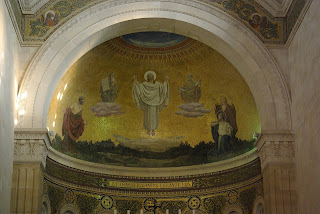
For all its mysteriousness, the story itself is simple enough. Jesus and his special inner circle of Peter, John, and James went up the mountain to pray – mountains traditionally being the preferred places for divine revelation. So it was while he was praying, while modeling for us how to be in God’s kingdom, that this majestically mysterious event occurred – in effect, revealing the very God whose presence and action our prayer is our response to.


Joining Jesus in this tableau, the Old Testament’s two preeminent prophetic figures, Moses and Elijah appeared in glory and spoke of his exodus that he was going to accomplish in Jerusalem – a reminder that the Mount of the Transfiguration leads directly to the Mount of the Crucifixion.


Completely confused, Peter, blurted out the first thing that came into his head. Master, it is good that we are here; let us make three tents, one for you, one for Moses, and one for Elijah. Poor Peter, talking as if this were their final destination, rather than part of a longer journey to Jerusalem and the cross! Distracted by everything he was seeing, Peter, not surprisingly, missed the point. So, from the cloud came a voice, God the Father himself speaking to clarify the situation, telling the disciples - and that includes us, who like them are also so easily distracted – to listen to his Son, God’s chosen Son.


Although Peter had already said that he acknowledged Jesus as the Messiah, in fact he and the other disciples were still quite clueless as to what that really meant. Much like us perpetually distracted multi-taskers, Peter and the disciples desperately needed to listen, to learn what Jesus was going to accomplish for our sake on the cross. Listening, however, is not easy. There is so much competing for our attention – from war news to reminders to reset our clocks.


Authentic listening is never easy. It takes effort. How often - and how well - do we listen to one another? It’s taken for granted nowadays that most of our political debate in this country consists largely of people shouting at one another – or rather shouting past one another – neither side listening to the other. Listening is hard because it takes time and energy and a readiness to take seriously someone’s experience besides my own.


Likewise listening to the Lord is always a challenge. There is nothing automatic about it. But it is always essential – for the Church as a whole, and for each one of us - no less so than it was for Peter, John, and James!


The good news is that, even as Peter, John, and James listened (and, with them, we listen), to the lesson of the cross, they saw (and we see) in the transfigured glory of Christ, the first faint glimpse of the resurrection, already present in the frightening darkness in which we still find ourselves. That means the Jesus we need to listen to is not some figure from the past but the living Christ present in his Church as its Risen Lord, who affords us the confidence and encouragement we will need to navigate in the darkness.


Distracted as we all are by our preoccupation with ourselves, it is no less tempting for us than it was for the disciples to want to stay in a tent on the mountain and perhaps proceed directly to the resurrection. 


In contrast to all such complacency, Lent is given to us each year to challenge us to listen to Jesus, to listen to his words and learn the lesson of his cross. Walking the Way of the Cross is a particularly powerful Lenten practice, intended to help us listen and learn the lesson of Christ’s passion. All our traditional Lenten practices – prayer, fasting, charity – are intended to help us to listen more attentively to Christ the living Lord present in his Church, and so to learn anew the lesson of his death and resurrection in our own lives.


Homily for the 2nd Sunday of Lent, Saint Paul the Apostle Church, NY, March 13, 2022.


Photo: Mosaic of the Transfiguration, Franciscan Church of the Transfiguration, Mount Tabor, Israel.


Saturday, March 12, 2022

Light and Dark


There is a scene in the most recent episode of HBO's The Gilded Age, a scene which, maybe more than any other, heralds the onset of the world we live in now. In that memorable scene (photo), Bertha Russell, Ward McAllister, Tom Raikes, Charles and Aurora Fane (all seated in their carriages) and Thomas Fortune and Peggy Scott (also on site but segregated) all stare in wonder and amazement (and, at least on McAllister's part, some prescient worry and sense of foreboding) at the new world being set in motion by the electrical revolution. For first time in human history, it had become possible to turn night into day, to illuminate the entire inside of a building at night as if it were outdoors at noon. That is the world we live in now and generally take for granted, such that we barely appreciate the difference darkness makes, the difference darkness has made for most people for most of human history, something we are reminded of only occasionally, as when war or some other calamity causes the power to go out and darkness is rediscovered.

Tonight's semi-annual ritual of changing the clock originated (and is still marketed) as part of our obsessive modern war against natural darkness. Modern life abounds in obsessive fantasies, of which the fantasy that we are somehow getting an "extra" hour of free daylight (when all we are doing is playing tricks with the clock) is just one of them, and by no means the most problematic. Actually, of course, the number of hours of light and dark don't change.  In exchange for an "extra" hour of light at the end of the work day, we get an extra hour of dark in the morning. The commercial interests that control our culture have consistently found that exchange to their benefit, even at the cost of school children forced to wait longer in the dark for the morning school bus and countless other such inconveniences. Back when I was a pastor and had to drive in the morning darkness to celebrate Mass at the local school on these March mornings and again on late October mornings, I was acutely aware of the impact of Daylight Saving Time's extra hour of darkness.

Now, however, it maters somewhat less to me personally. On the contrary, rising early but without (on most days) the familiar pressure to rush somewhere, I have come to savor the experience of sitting in silence in the early morning darkness. Even in busy, noisy New York, I am amazed at how quiet it is at that hour, at least in my small corner of the city. In the stillness, the early morning dark becomes a protective canopy permitting a reflective restfulness no other hour allows.

So while the world gleefully plays its semi-annual tricks with the clock, I will try to put that "extra" hour of morning darkness to good use in silent stillness.

Thursday, March 10, 2022

Queen Esther's Prayer


The Old Testament reading at this morning's lenten Mass (the Thursday of the first Week of Lent) is part of the famous Prayer ascribed to Queen Esther, the heroine of the biblical book which bears her name, who, having head from her Uncle Mordecai the terrifying news about the impending threat to the survival of the Jewish People, Queen Esther, seized with mortal anguish, had recourse to the Lord. To highlight the seriousness of the crisis, the context provided by the complete account in the Book of Esther (in what is commonly called "Addition C") tells us she took off her splendid garments (she was a queen, after all) and put on garments of distress and mourning. 

(That's a nice nostalgic reminder that there once was a time - until quite recently in fact - when people dressed appropriately for the occasion, before the current tyranny of casual dress overwhelmed everything, driving yet one more nail in the coffin of civilized living.)

Esther's prayer is desperate, for the situation in which the Jews found themselves thanks to Haman's genocidal ambitions, was indeed a desperate one. It is also poignantly universal, expressing the sensibility of everyone who has ever felt threatened, alone, and abandoned.

"My Lord, our King, you alone are God. Help me, who am alone and have no one to help but you, for I am taking my life in my hand. ... O God, more powerful than all, hear the voice of those in despair. Save us from the power of the wicked, and deliver me from my fear."

Esther's prayer is one which could be prayed by anyone in serious anxiety about any impending evil - personal and private or political and public. The threat immediately facing the Jewish People was, of course, a political threat of national extinction. Hence the significance of Esther calling God Israel's King - presumably in contrast to the merely earthly sovereign whose royal rank she shared. But, while Esther seems to speak somewhat disdainfully of her royal (but Gentile) husband in her prayer, she is also well aware that it is her royal position which may be the means for her people's salvation. As her Uncle Mordecai himself had told her: "Who knows but that it was for a time like this that you obtained the royal dignity?"

We might well imagine pious Jews praying something like Esther's prayer at any of the many other threatening moments in their long national history, so often punctuated by persecution. In an analogous way, we might well imagine Ukrainian Christians today praying something like Esther's prayer in this decisively dangerous time in their national history. We might well imagine any of us praying something like Esther's prayer in moments of acute danger we may have experienced or maybe will experience. Perhaps for some the global covid pandemic may have called forth somewhat similar sentiments. The story of Esther reminds us that life, both personal and national, is indeed dangerous, that threats abound on all sides, that feeling endangered and threatened, alone and abandoned, may happen a lot more than we would prefer to imagine. But it teaches - and that is, after all, the point of the story (and presumably the point of the Church's use of it in her liturgy) - that God's providential care for his people is infinite and manifests itself in surprising ways. And it also teaches us (at least by example) not to disdain the natural, human opportunities social and political life affords us to benefit from God's providence in the here and now.

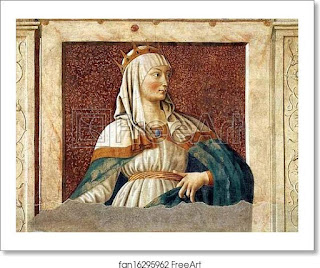
Photo: Queen Esther, fresco in Florence's Galleria degli Uffizi, by Florentine Renaissance painter Andrea del Castagno (c. 1419 – 1457).

Tuesday, March 8, 2022

On Neo-Christian Political Populism


One of the challenges religion has faced throughout human history has been being subordinated to politics. This may have a heightened salience right now in regard to the Orthodox Church's past and present relationship to the governing power in Russia, whether it was the Tsar or Stalin in the past or Putin in the present. Manifested in very different ways, however, this issue arises also in the traditionally Latin-Christian West, where political parties have been known to embrace or at least identify with certain forms or aspects of the Christian past. 

So it was with great interest that I recently read an article* on how certain European right-wing parties have increasingly embraced Christianity as a national/civilizational identity marker but largely without any corresponding embrace of religious belief or practice and even framing Christianity as itself somehow secular and democratic, especially in contrast with Islam and Muslim immigrants. The parties which the authors examine are those in Austria, Belgium, Denmark, France, Netherlands, Norway, Sweden, and Switzerland. While those parties are different from one another in various respects, they can all be more or less characterized in the above manner - "in contrast to their far-right counterparts in the U.S., Hungary, or Poland, which lack the same liberal-civilizational emphasis."

Following social science literature, the authors highlight the concept of populism as an ideologically flexible anti-elitist politics, "resting on a vertical juxtaposition between a virtuous and. homogeneous 'people' on the bottom and a corrupt and self-serving 'elite' on the top." Such populism is also typically anti-pluralist, in that the extolling of "the people" involves exclusion of others, e.g., immigrants and other minorities. Religion is relevant to such populist discourse in that it offers "a rich and unique array of culturally specific resources," more so than "other nativist identity markers."

What appears so striking about this rediscovery of Christianity and Europe's Christian cultural heritage is the fact "that Christian belief and practice has been in decline for decade in Europe, and that the eight countries where these parties hail from are among he most secularized societies on earth." Moreover, with recent changes in popular moral attitudes, political movements have had to adapt accordingly, thus severing pervious linkages between religion and the more traditional conservative politics. "Rather than a source of morality, Christianity here becomes a secular appeal to shared ancestry, heritage, memory, and a nativist conception of groupness" - even to the point of "arguing that Christianity itself is a worldly and progressive religion, which helps to create a contrast  with the uncivilized qualities they ascribe to Islam." 

Unsurpisingly, the authors note that this has sometimes resulted in conflict between such parties and traditional churches. Examples cited are Marine Le Pen telling the Pope to stay out of French affairs, as a result of the Catholic Church's embrace of refugees, and the Austrian FPO's characterization of the Church itself "as part of the elite establishment." Thus, "many Catholic and Protestant clergy members have been outspoken in their criticism of these parties for appropriating religion for exclusionary purposes and for electoral opportunism." Thus, unlike more traditional Christian-Democratic parties, "meaningful references to Christian belief, doctrine, practice, theology, or values are marked by their sheer absence."

In contrast, American, Polish, and Hungarian populists "embrace Christianity with relatively stronger references to faith and doctrine, and as a key asset to mobilize socially conservative groups and policies." Their rhetoric is thus "more strictly nationalist." Obviously, that is a very important difference. Indeed, unlike the European counterparts considered in the article, U.S. right-wing populism has publicly retained certain traditional Christian moral proscriptions (largely in relation to abortion and homosexuality but dramatically less so in other areas, such as divorce). That said, it seems increasingly evident that the religious component itself is increasingly subordinated to the political pursuit of such culture war conflicts. Traditional religious belief and practice seem to continue to decline in the U.S. - contrary to what was widely believed only a few decades ago. Yet it continues to play a part in public political conflict like its European counterparts, although significantly without the latter's "liberal-civilizational emphasis."

*Finding Religion: Immigration and the Populist (Re)Discovery of Christian Heritage in Western and Northern Europe at:

https://www.mdpi.com/2077-1444/13/2/158?utm_campaign=releaseissue_religionsutm_medium=emailutm_source=releaseissueutm_term=titlelink21

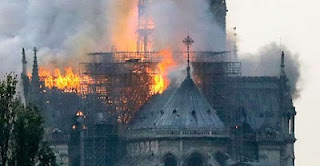
Photo: Notre Dame de Paris on fire in 2019. While itself unrelated to the issue of Neo-Christian European Populism, I think this image serves as a particularly vivid pictorial symbolic expression for the precarious state of the Church in increasingly post-Christian societies.

Sunday, March 6, 2022

Nuper Nonulli


A week ago, the Paulist Fathers celebrated the centennial of ministry at the American Church in Rome, inaugurated at the Roman church of Santa Susanna on February 26, 1922. But, before any of that could have happened, before that could even have been a possibility, something happened in Rome almost 64 years previously, on March 6, 1858. On that day, the Congregation for Bishops and Regulars issued its Decree Nuper Nonnulli, which brought Isaac Hecker's first stay in Rome to its successful conclusion. That decree dispensed Hecker and 4 other American-born, formerly Protestant, Redemptorist priests - Augustine Hewit, George Deshon, Francis Baker, and Clarence Walworth - from their religious vows as Redemptorists and authorized them to return to the U.S. to continue, “under the direction and jurisdiction of the local bishops,” their work for the evangelization of the country. This set the stage for Hecker (together with three of the other four) to found the Paulist Fathers, four months later, on July 7, 1858, in New York City.

The back story to that decree was that Hecker and the four others had decided to appeal directly to the Redemptorist authorities in Rome for an English-speaking American house primarily focused on missionary work, an idea which had originated with their previous Provincial, but which his successor had reservations about. Hecker had sailed for Europe, arriving at the Redemptorist headquarters in Rome in August 1857, to find himself confronted by the Redemptorist Superior, Fr. Mauron, who had already received from the Provincial a letter critical of Hecker and his colleagues’ project. Later that month, the Redemptorist General Council decided that Hecker’s unauthorized trip was in itself grounds for dismissal. The decree of dismissal also accused him “a way of acting and thinking in general … by no means in harmony with the laws and spirit of our Institute.”

How Hecker went from successful Catholic author and prominent spokesman for the Church to being expelled from his religious community involved a legitimate debate within both the Redemptorists and the American Church about mission priorities with scarce resources. It involved ethnic tensions within the community - between the German-born and the American-born Fathers. It involved canonical questions concerning the correct interpretation of the Redemptorist Consitution – whether or not an individual member had the right to travel to Rome to make a direct appeal to the General Superior and his council. It highlighted contemporary community concerns about governance – American anxieties about overcentralization in the community and Roman worries about yet another division of the community. There were also, of course, the customary cultural misunderstandings between Europeans and Americans – rooted in their very different experiences of religion and religion’s relationship with 19th-century society.

The fourth image at the base of Hecker’s monumental sarcophagus in the Paulist Mother Church in New York highlights his ordeal in Rome in the six months that followed his expulsion from the Redemptorists.  

How did Hecker react to this sudden reversal? In a letter to his brother George, written just days after his expulsion, he wrote: “This morning I said Mass in St. Peter’s. Our affairs are in the hands of God. I hope no one will feel discouraged, nor fear for me. All that is needed to bring the interests of God to a successful issue is grace, grace, grace, and this is obtained by prayer, and if the American Fathers will only pray, and get others to pray, and not let anyone have the slightest reason to bring a word against them in our present crisis, God will be with us, and Our Lady will take good care of us."

“So far," Hecker continued. "no step that has been taken on our part need be regretted; if it were to be done over again it would have my consent; the blow given to me I have endeavored to receive with humility in view of God; it has not produced any trouble in my soul, nor made me waver in the slightest degree in my confidence in God or in my duty towards Him. Let us not be impatient; God is with us, and will lead us if we confide in him.“ [From a letter of Father Hecker to his brother George V. Hecker, September 2, 1857].

Armed with supportive letters from leading U.S. Bishops, Hecker took his case to the Congregation of Propaganda, which, as the curial body in charge of the Church in mission territories, then had jurisdiction over the U.S. Church (and would continue to do so until 1908). Already in September he had begun his eventually successful appeal to the Holy See and had had his first interview with Alesandro Cardinal Barnabó, Prefect of the Congregation of Progaganda, who was interested in the Church’s missionary efforts in the U.S. and was already aware of Hecker (who had recently been considered as a candidate for Bishop of Natchez, MS). Awaiting the outcome, Hecker actively promoted his case in every available way – including writing two articles in the important Jesuit journal Civiltá Cattolica, optimistically assessing the Catholic Church’s prospects in the United States: 

“One might say that the longing after a more spiritual life is one of the principal characteristics of the American people. So far from being a nation absorbed in commerce and in accumulating material wealth, there is no other people who are so easily kindled to a religious enthusiasm, hence the success of the Methodists among them. And few will be found who are more ready to make sacrifices for the religious convictions, witness their countless churches, their Bible and Tract societies spread over that vast country.” [“The Present and Future Prospects of the Catholic Faith in the United States of North America,” December 1857–January 1858].

Visiting and celebrating Mass in Rome’s historic churches, themselves so identified with the mission of the Church in the past, Hecker had abundant opportunities to pray for the present evangelization of his home country: “Wednesday I said Mass in the Mamertine prison, in which St. Peter was confined by the order of Nero; and also St. Paul. The pillar is there in which they were chained, and the fountain remains which sprung up miraculously at their feet, in whose waters they baptized their gaolers and twenty-seven soldiers. There were with me four American students, and you can easily imagine that I prayed earnestly in Holy Mass to obtain or us all the zeal of the Apostles for the conversion of our country.”   [From a letter to Mrs. George V. Hecker, November 7, 1857].

Writing to his fellow missionaries back home that Christmas season, Hecker connected their situation to his sense of being called to serve the Church in American in a special way: “I must confess to you frankly that thoughts of this kind do occupy my mind and day by day they appear to come more clearly from heaven. I cannot refuse to entertain them without resisting what appears to me the inspirations of God. You know that these are not new opinions hastily adopted. From the beginning of my Catholic life there seemed always before me, but not distinctly, some such work, and it is indicated both in Questions of the Soul and the Aspirations of Nature and I cannot resist the thought that my present peculiar position is, or may be, providential to further some such undertaking.” [Letter to the American Fathers, January 1, 1858].

Writing home again after the Nuper Nonnulli Decree, he told his associates: "We are left in entire liberty to act in the future as God and our intelligence shall point the way. Let us be thankful to God, humble towards each other and everyone else, and more than ever in earnest to do the work God demands at our hands." [Isaac Hecker, Letter to the American Fathers, Rome, March 11, 1858].

On Nuper Nonnulli Day 10 years ago, I visited the Basilica of San Lorenzo Fuori le Mura (St. Lawrence Outside the Walls), which is one of the Seven "Pilgrimage Churches" of Rome. It enshrines the Tomb of Rome's esteemed 3rd-century martyr, the Deacon St. Lawrence, martyred August 10, 258. In addition to Lawrence's tomb, it also houses a marble slab, said to have been where the martyr's body was first laid after his death. It also has a beautiful medieval chiostro (cloister), housing scores of antiquities, which alone would be worth a visit.

The connection with Nuper Nonnulli, however, is that, since 1881, it has also housed the tomb of Hecker's papal patron, Blessed Pope Pius IX, with whom Hecker had two audiences during his momentous months in Rome - one before and another after the Decree Nuper Nonnulli. Pius IX was Pope from 1846 to 1878, but his burial at S. Lorenzo was delayed until 1881 in the hope of avoiding a hostile demonstration in the recently united Kingdom of Italy. As it turned out, a "patriotic" Italian gang did attempt (unsuccessfully) to throw the Pontiff's body in the Tiber! In his time, Hecker was obviously not unaware of the anticlericalism of the Kingdom of Italy and the various French Republics and of the political failure of ecclesiastical intransigence in those countries, and he could hardly not notice how, for all the prejudice the Catholic Church experienced in the U.S., the Church was in many respects really more free there than in much of traditionally Catholic Europe.

“The conversion of the Americans would be very difficult,” Pius IX had observed at his first meeting with Hecker on December 22, 1857, because Americans “are so engrossed in worldly pursuits and making money.” In response, Hecker compared the young country to “the young father of a family, who is furnishing his house.” Actually, Pius himself was quite prepared to acknowledge that Americans could also be generous, He was aware of “the bright side as well as the dark side of the American character.” But in the United States the Pope feared something that seemed even darker than its capitalist excesses - the country’s contentious politics. He worried that “in the United States there exists too unrestricted liberty” and a partisan spirit “in which parties get each other by the hair.” To this, Hecker confidently replied. “there is also the Catholic truth, which, if once known would come between these two parties and act like oil on troubled waters.” [“From a letter to the American Fathers, dated Rome, December 22, 1857]

Hecker’s confidence about Catholicism’s prospects in America and American society’s potential receptivity to Catholicism animated his life-long mission. In one of his last Catholic World articles, published in the year he died, Hecker quoted an anonymous acquaintance, who said “he didn’t care for union of church and state if he could have union of church and people.” [“The Mission of Leo XIII,” Catholic World, 48, 1888] Such comments convey how important the religious transformation of society and culture was for Hecker, and how he confidently expected this to accomplish what others looked for in politics.

Like the 19th-century’s most famous observer and analyst of Jacksonian American society and institutions, the French nobleman Alexis de Tocqueville (1805-1859), Hecker appreciated the problem posed by the fundamentally fragmented character of American society with its fragile connections between individuals, and the dilemma of how to create a community capable of uniting free individuals. In 19th-century Europe, the Church was struggling to survive as an institution against an increasingly liberal political order. There it sought to counteract the social fragmentation associated with liberalism and to reconnect increasingly isolated individuals into a community by preserving, repairing, or restoring religious bonds. The way to do this was to assert the Church’s traditional claims to authority as vigorously as possible and to insist upon its political privileges and institutional rights in relation to the state. In contrast to that time-honored political approach, Hecker saw a social solution in which Americans, converted to Catholicism as the answer to their deepest human aspirations and thus opened up to the outpouring of the Holy Spirit in their lives, would "act like oil on troubled waters" to calm the country's contentious politics. 

What are we to make of Hecker's astonishingly hopeful prediction today?

Karl Marx being but the most infamous example, 19th-century thinkers tended to extrapolate from their contemporary experience and make predictions based thereon. Hecker had faith, obviously, in the truth of Catholicism and in its unique ability to respond to both the Questions of the Soul and The Aspirations of Nature (the titles of his two apologetical books composed in the 1850s). Based on his personal experience of New England Protestantism, he also confidently concluded that Americans were ripe for religious renewal, ready to recognize what he had recognized under the direction of the Holy Spirit.

Having himself experienced the divided and fragmented character of American Protestantism, Hecker always appreciated the importance of authority in the Church, as the divinely sanctioned providential alternative to the principle of individual interpretation.  For Hecker, “the test of our being directed by the Holy Spirit, and not by our fancies and prejudices, is our filial obedience to the divine external authority of the Church. … The measure of our love for the Holy Spirit is the measure of our obedience to the authority of the Church.” [“The Safeguards of the Paulist,” PV, pp. 141-142].. The internal order of the visible institutional Church was, for Hecker, the divine sanctioned means for the fulfillment of Christ’s life and mission on earth, pouring the oil of the Holy Spirit on the troubled waters of the world

Meanwhile, more than a century and a half later, the American religious situation has evolved and developed in ways which both confirm and challenge elements of Hecker's expectations. Americans today are again deeply divided, as they were in Hecker's time. Today, as David French has written, "Americans belong to their political 'tribe' not so much because they love its ideas but rather because they despise their opponents," while we "increasingly live separate lives - living in separate locations, enjoying separate media, and holding separate religious beliefs."

The viability of Hecker's vision - whether and how "the Catholic truth, which, if once known would come between these two parties and act like oil on troubled waters” - is thus a vital question for our own troubled time, which is both so similar to and so different from the context out of which Hecker formulated his hopes and aspirations.