Thursday, April 28, 2022

20th-Century "Soldiers of God" (The Book)


When I was in high school in the early 1960s, I came across a book about the French Worker-Priests Movement, which was by then already past history. It didn't make me want to become a worker-priest, but it did make me mildly interested in the new and lively developments in post-war French Catholicism. I then came across that post-war renaissance of French Catholicism indirectly in college when I first read and studied Albert Camus, who did engage intellectually with contemporary Catholic thinkers in France, especially among the Dominicans. Then in grad school, I delved into Jacques Maritain's political philosophy and the larger trajectory of the evolution of his thought in relation to 20th-century French Catholic political thought. Finally, in seminary, I studied the impact of French nouvelle theologie at Vatican II. 

So it was with eager interest that I recently read Sarah Shortall's fascinating study of some of those impactful 20th-century French Jesuit and Dominican theologians, Soldiers of God in a Secular World: Catholic Theology and Twentieth-Century French Politics (Harvard U. Pr., 2021). I am sure that genuine scholars have already adequately reviewed Shortall's fine work. Without attempting anything like a thorough review, there are a few aspects about her study that I would particularly like to highlight.

There are any number of reasons why one should find the pioneering work of those 20th-century French Jesuit and Dominican theologians particularly interesting, not least because of the influence they exerted in the run up to (and during) the Second Vatican Council. Also, while the France in which Jesuits Henri de Lubac and Gaston Fessard and Dominicans Marie-Dominique Chenu and Yves Congar were formed was one where secularism had legally won, it was a France where Catholicism and ideologies still identified with Catholicism (like the problematic, right-wing Action française) were still fighting back. For Shortall, "the key quandary facing the Catholic Church in the twentieth century" became "how to maintain a public role for itself once the institutions of public life has been secularized.” (Analogously, this was one of Paulist founder Isaac Hecker's concerns in the 19th century, a question still unresolved in the U.S. today.) It is her contention that, through the work of these theologians, “the Church became modern by asking, not how Catholics came to ‘accept’ or ‘embrace’ typically modern principles, but how they contested and transformed what it meant to be modern.” (In a sense, that was what Hecker was trying to do in offering Roman Catholicism as an alternative to Protestant Liberalism.)

The new theological responses the book identifies followed two broad directions. There were the Dominicans, who followed Saint Thomas Aquinas and made "a distinction between the natural and supernatural ends of human life, which allowed it to grant a certain degree of autonomy to temporal affairs," and there were the Jesuits, led by de Lubac, who went back farther than Thomas to the Church Fathers and who "insisted that it was not possible to imagine an autonomous order of human affairs that was oriented to a purely natural end" and so "looked to the Church rather than the state as the primary framework for collective life." Revived Thomism "tied the antimodernist Church of the turn of the century that reinvented itself as the primary defender of human rights and democracy in the latter half of the twentieth century," while the Jesuits rejected liberal politics' premises "including the primacy of the individual, the sovereignty of the state, and the distinction between the private and public spheres." But both approaches transcended (and presumably if retrieved might still help us today to transcend) secular political categories and distinctions between "right" and "left." 

The Leonine renewal of Thomism, was one way out of the 19th-century impasse, an alternative to integralist intransigence. But it may also allow too much to secularism. In contrast (like Hecker) “de Lubac stressed the internal dynamism of human nature, in which the supernatural was already at work, infusing and raising up the natural order from within.”

The first part of the book is particularly interesting for the way it connects the origins of these developments with both the Jesuits' and the Dominicans' experiences of "exile." After the separation of Church and State, the two communities were expelled from France and forced to relocate their formation - the Jesuits to the British island of Jersey and the Dominicans to Belgium. For Shortall, this isolation "served as a powerful stimulus for intellectual production." Not for the first time in the Church's history, the restrictions imposed by state persecution helped renew and revitalize the Church internally. Then, at the opposite extreme, so to speak, from the isolation of exile, compulsory military service during World War I, besides toning down the conflict between Church and State, brought the young Jesuits and Dominicans into contact with a whole other class of Frenchmen. "They were astounded by the level of unbelief they observed among the men they encountered in the trenches" and realized "the need for new apologetic and evangelical tools to bridge" the great gulf between the Church and the French masses.

Shortall also pays attention to something that students of ideas may otherwise overlook: "the need to attend to the communities and institutions in which religious thought takes shape," in particular "the distinctive spirituality fo the order and the affective bonds forged in the course of religious life" and  particularly the crucial role of friendship in the development of ideas.

The second section of the book addresses the experience of World War II, German occupation, and the Vichy regime. For many Catholics, still alienated from the secularist Third Republic, "Petain was the providential man sent to lead the nation in its penance." Shortall characterizes the Petain regime as "a rather vague project of moral and physical regeneration," which accordingly appealed to a wide audience, while achieving "a degree of Church-state harmony not seen since the 1870s." In this challenging situation, "theology became  a key political tool in the context of war precisely because it seemed to be apolitical." For the Jesuits, this period marked the beginning of a shift in focus from incarnation to eschatology, "a reorientation that would shape their postwar theological work in crucial ways." Meanwhile, on the Thomist side, "the war witnessed the first flowering of a distinctly Catholic human rights theory," which simultaneously defended universal human dignity against Nazi totalitarianism, while distancing itself from the 18th-century liberal tradition of rights."

The book's third part highlights the critical twenty years from the end of the war to the end of the the Second Vatican Council. This was the era of postwar Catholic engagement with the Left, the period of the Mission de France and the "Worker Priests" experiment. The Thomist model facilitated "acknowledging the presence of grace in even the most secular and anticlerical milieus." Chenu famously said: "The task of the missionary is not to figure out how the Church, as it is now, will be the shape of the world; it is to discover how the world, as it is now, will be the material for the Church." This was also the peak period of a vibrant Catholic existentialism, which "served as a counterpoint to the main Catholic humanism of the day - the Thomist anthropology that underwrote Jacques Maritain's theory of human rights."

Then came the crisis, the attack on the ressourcement project's "intrusion of historical thinking into theology" and the crackdown on the Catholic Left that even Maritain barely escaped. Even so, Shortall highlights how the movement was actually gaining influence during this period as a new generation of European theologians arose (among them Joseph Ratzinger) who were influenced by the likes of de Lubac, Chenu, and Congar, while Catholic students from Africa, Asia, and Latin America "became engaged in the main currents of French Catholic thought."

With Vatican II, nouvelle theologie came into its own. Yet the debate over Gaudium et Spes highlighted the split between the Thomist incarnational approach, with its positive valuation of worldly affairs, and the Jesuits' more Augustinian and eschatological emphasis on the centrality of the supernatural. "Both groups grappled with the same problem: how to bridge the divide between the church and the modern world without reducing one to the other." The split would be reflected in the post-conciliar split between the journals Concilium and Communio.

A brief Epilogue traces the continuing influence of these theologians in the dramatically changes context of post-Conciliar Catholicism, in which pews and seminaries emptied in Europe while the Church;'s demographic center shifted south. Liberation theologians found "a model capable of overcoming the separation between the natural and supernatural orders and endowing the struggle for social justice with redemptive value." In Europe too the "theological turn" in continental philosophy reflected "the affinities between Catholic antimodernism and secular postmodernism - their shared suspicion of the modern cult of universal reason, the transcendental subject, and historical progress." Meanwhile, secularism itself has come to be better understood as "a positive ideology in its own right, by which the state seeks to manage religion and police the public forms it can assume." 

A century later, that "exile" experience still speaks in part because it remains so relevant!


Rev. Ronald Franco, CSP

Wednesday, April 20, 2022

The Great Unmasking


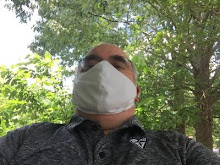
It has been said that the one and only lesson we seem to learn from history is that we don't learn from history. So here we go again, ripping off the masks that, along with vaccines and boosters, have been our main protection against the insidious covid virus that shows no sign of departing the scene it has dominated for two years now. (Wearing masks in public has also protected many of us from flu and colds as well.) I flew on a plane Tuesday, the first full day after the infamous Trump-appointed Florida judge's malevolent ruling striking down the CDC's mask mandate. (Why, after all, should the government institution appointed precisely to protect public health be able actually to protect public health?) On the plane, I was one of maybe 10% at most who were wearing masks on the plane. I celebrated Mass in a church today where (thankfully) most congregants were masked but by no means all - even there in a neighborhood with one of the highest infection rates in the nation! Not only do we never seem to learn any lessons from even our most recent history, we seem as a society to revel in that regrettable reality. 

In hac lacrimarum valle, masks are a common-sense response to a dangerously ubiquitous but somewhat manageable threat. Common sense! What we used to call "ordinary" means of protecting one's own and others' health and well being. Nothing ultra-burdensome or "extraordinary," just common sense combined with a modicum of public-spiritedness.

Call it individualism or libertarianism or whatever, there is something in American culture that crosses class and other social divisions and unites our society in a rejection of public spiritedness, in a perennially persistent pattern of self-induced self-destruction.


Sunday, April 17, 2022

This Is the Day


Morning has always been my favorite time of day. Although I am almost always awake early, most mornings I have no reason to rush, now that I am in what we euphemistically call Senior Ministry. Morning Mass in the Motherhouse chapel is at 8:15. So most mornings I have plenty of time to sit in silence and savor the early morning quiet.


Every morning is, in a sense, a new beginning, a chance to start over. In 1st-century Jerusalem, the Sabbath Day’s rest would have been followed in the morning on the 1st day of the week by the typical urban hustle and bustle as people returned to their daily work and regular routines. It would have been business as usual too, although much more silently so, for the dead, decaying in their graves, who (then as now) were expected to stay dead. But, when Mary of Magdala came early in the morning, while it was still dark, she saw that the stone, that was intended to be a permanent barrier between the living and the dead, had been removed from the tomb.


John’s Gospel mentions Mary only. Other Gospel writers tell us she was accompanied by other women as well.


Like the tragic images we have seen in recent weeks of mass burials in Ukraine, and like the many abridged, truncated burials during the pandemic, Jesus had been buried in haste. He had died in the afternoon prior to Passover, as the Passover lambs were being sacrificed in the Temple. Having replaced that sacrifice with the sacrifice of himself, he was buried – in a hurry because of the impending holiday. So, the women’s purpose in visiting the tomb was mourn Jesus properly.


Instead, they found something surprising and unexpected. instead of staying in the tomb (as the dead, then as now, were expected to do), Jesus lives again – and lives a totally transformed and gloriously new kind of life. So, this 1st day of the week, we awaken not to business as usual, but to something totally new – to the greatest thing that God has ever done, the most important event in all of history.


And yet, however hard it may be for us to imagine (in this age of omnipresent social media and the 24-hour news cycle), at the time hardly anyone even noticed. It is rather the resurrection’s long-term effects, which we notice, which we experience, and which bring us here today – as Jesus’ body that lived and died and still forever bears the marks of his passion emerges from the tomb to transform our world, starting right here and now with us.

Even so, as we just heard, the first few made aware of this momentous news left the empty tomb more confused than elated: For they did not yet understand the Scripture that he had to rise from the dead.


In a world which seems permanently stuck in a dark, pre-dawn position, the disciples needed to experience the kind of change that could only come from the Risen Lord’s living presence among them. And so do we, which is why we are here, where the Risen Lord brings us together as no one else can.


Since have no visual or verbal record the actual moment of Jesus’ resurrection, what we have are the resurrection’s effects – first of all, on the disciples, and then on the world, and finally on us.


The resurrection’s effects on the disciples are what we read and hear in the gospel stories of, first, an empty tomb and, then, of appearances by the risen Lord – and still later in the preaching of Saint Peter and others in the Acts of the Apostles and in the amazing response of those who heard their preaching, and finally in the testimony and letters of Saint Paul, who wasn’t there at all at Easter, but who eventually experienced the risen Lord himself and was forever changed as a result.


The resurrection’s effects on the world were soon evident in people’s responses to the apostles’ amazing story, in how the story has since spread, in the dynamism at the heart of the Church’s existence that has propelled it outward in 2000 years of world-transforming activity.

Finally, its effects are evident in us, transformed in mind and changed in heart, by the unique power of this utterly unexpected event, which has glorified (almost beyond recognition) the humanity Jesus shares with each of us, and which has brought us together in a way in which nothing else could have, empowering us not so much with new knowledge as with a new hope.  (If “knowledge is power,” hope is even more so. Just ask the Ukrainians!)


So, instead of the 1st day of the week condemning the world back to business as usual, this 1st day after the Sabbath is starting something new – not just a new week, but a new world, where death no longer has the final say. We are here, in this holy place today because there is now a new day, on which God has, so to speak, re-created the world in his Son, Jesus Christ, crucified, dead, and buried, but now risen from the dead. That new day is today – and every day from now on, until we too will appear with him in glory [Colossians 3:4].  And so we say: This is the day the Lord has made! Let us rejoice and be glad!


And that is what brings us back Sunday after Sunday, to hear what happened next and so experience the effects of the resurrection ourselves. On my way into the church this morning, I paused at the parish photograph from 11 years ago. I thought of all the people in that amazing photo, whom I had the privilege to know in my 10 years as your pastor, some of them no longer with us, and of all that has happened here for almost 170 years of parish life, that, like the crowd in that picture, has spilled out from this building, into the surrounding society. Today in the bright light of the resurrection, we all join hands and hearts with our predecessors here and with all who have preceded us in the long chain that takes us back to those first disciples, confused and frightened at first, but then overjoyed and empowered by what they – and we - have experienced.


Now, in the Church, we’re not all the same. Some of us run fast, like the disciple singled out in the Gospel story. Others, beset by doubts or daily difficulties, weighed down by so many struggles, run much more slowly. What matters most, however, is where we finally end up. The early Christians esteemed Jesus’ disciples (particularly Peter), but they understood that, even for them, following Jesus was neither automatic nor easy.


So, whether we are runners or walkers, let us also accompany the disciples to the tomb, which in a business-as-usual world would have remained dark and sealed, but from which the stone has been removed – so we too can see and believe. Easter invites us to put ourselves in the position of those disciples – unexpectedly (and excitedly) experiencing something surprisingly new in a world where everything else seems so deadly ordinary and old. 


That is why every day for the next seven weeks, the Church retells the story of the first Christian communities in the Acts of the Apostles - the story of those who first experienced the reality of the resurrection and its power to change the world.


The story of those first disciples and those first communities of Christians invites us to live in the here and now with the assurance that what was happening, there and then, continues to happen as the Risen Lord continues to reveal himself through the experience we share as members of the uniquely new community that is the Church, brought into being and animated by the Risen Lord's gift of the Holy Spirit, through whom we are joined in the Risen Christ’s body and ascend with the Risen Lord to his Father.


Easter invites us to start living, here and now in the present, that new and different future to which the Risen Lord is already leading us.


Homily for Easter Sunday, Immaculate Conception Church, Knoxville, TN, April 17, 2022.

Friday, April 15, 2022

The Passover of the Lord


The story of Good Friday and Easter, the whole story of Jesus’ death, burial, and resurrection is intimately wrapped up with the story of the Passover. Jesus died, according to John's account, on the afternoon before the Passover, even as the Passover lambs were being sacrificed in the Temple, and was hastily buried because the festival was about to begin. His accusers would not enter Pilate’s headquarters in order not to be defiled so that they could eat the Passover.

By convenient coincidence, the calendar this year coincides with the timing of the Passover in John's account in the Gospel. There is no Passover sacrifice anymore, no passover lamb since the Temple was destroyed, but the feast is still kept and the exodus remembered at the Passover meal which will take place tonight in Jerusalem and New York and wherever the story of God's salvation of his people is still told.

Passover celebrates the most important event in Israel’s history – not just as something interesting that happened, once upon a time, a long time ago, but as something powerfully real and meaningful in the present, and a sign of hope for the future. In the words of the Passover ritual: In every generation let all look on themselves as having personally come forth from Egypt. … It was not only our ancestors, blessed be He, that the Holy One redeemed, but us as well did he redeem along with them. … In every generation they stand up against us to destroy us, and the Holy One, blessed be He, saves us from their hand.

Being saved! That is what this is all about! At the exodus, the blood of the lamb marked the doors of the houses of God’s People. Later in history, the blood of the lamb was sprinkled on the altar of the Temple. Now, in Jesus, the great high priest who has passed through the heavens, the blood of the lamb has been shed, once and for all, on the altar of the cross – our doorway to salvation. Marked by the blood that saves us all, the cross has thus become the Church’s door.  A dreaded instrument of disgraceful death, the cross is now, thanks to this day, our gateway to freedom and new life, a triumphant sign of glory.

As Pope Francis has said, “The Cross is the word through which God has responded to the evil in the world.”

And in this world, in Ukraine and in so many other troubled places, as well as in the sufferings of so many individuals and families and in the ubiquitous sadness that seems to be smothering our society, there is indeed plenty of evil that cries out to God for a response!

Of course, even to recognize Christ's Cross as God's word of response to all this myriad evil in the world seems itself a mystery.

In the citadels of secular society and its popular and political culture, represented in the Gospel by the (Putin-like?) figure of Pontius Pilate, whose caustic skepticism simply dismisses the disconcerting possibility of something so definite and restricting as truth), in such a society, in such a world as ours, the cross can be only an ugly, nonsensical failure. But the paradoxical power of the cross is that Christ’s true triumph lay precisely in his not dramatically descending from the cross (like some celebrity influencer), but in ascending the cross as a condemned criminal – a paradox succinctly summarized by the prophet Isaiah: he was cut off from the land of the living, and smitten for the sin of his people … But … the will of the Lord shall be accomplished through him … and he shall take away the sins of many, and win pardon for their offenses.

It was this strangely paradoxical text that an ancient Ethiopian court official was reading, when he met the evangelist Philip in the Acts of the Apostles and asked him: I beg you, about whom is the prophet saying this? Philip, we are told, opened his mouth and, beginning with this scripture passage, he proclaimed Jesus to him. With Philip, the unanimous witness of Christian tradition has recognized - in Jesus crucified, buried, and risen - the one who perfectly fulfills the prophet’s paradoxical words.

As the thrust of the soldier’s lance into Jesus’ side certified, Jesus really died on the cross. Then, bound with burial cloths according to the custom, his body was buried – all of which should then have been the end of the story.

And yet, whatever we do today, however we observe this day, it is not with a funeral, for we are not in mourning today. If Jesus had in fact remained dead, if his body had indeed decayed in the tomb, then we would hardly remember him at all, nor commemorate his death today. Nor are we pretending he’s dead (as if we were acting in a play) until we see what (if anything) happens on Sunday. Die Jesus really did, but he isn’t dead anymore. And that is why, according to the ancient language of the church’s worship, we celebrate the cross of Christ.

As St. John Chrysostom expressed it, some 16 centuries ago: Before, the cross was synonymous with condemnation; now it is an object of honor. Before, a symbol of death; now the means of salvation. It has been the source of countless blessings for us: it has delivered us from error, it has shone on us when we were in darkness. We were vanquished, yet it reconciles us with God. We were foes, yet it has regained God’s friendship for us. We were estranged, yet it has brought us back to him.
 
And so, with great liturgical solemnity or in silent simplicity, we salute the wood of the cross on which hung the salvation of the world. In every generation (to paraphrase the Passover ritual), each one must personally look upon the cross of Christ and embrace it for oneself. So let us confidently approach the throne of grace to receive mercy and to find help in our time of need.

We venerate the cross individually (imitating Mary, his mother standing by the cross of Jesus) for each one of us is challenged as a disciple to realign his or her life, to model his or her  life on the mystery of Christ’s cross - despite the difficulties life puts in the way, despite the obstacles each one of us personally puts in the way. We venerate the cross together as the community of Christ’s holy Church - born on the cross in the blood and water which flowed out from Jesus’ side as a sign of the Church’s sacramental life and mission - because it is together as Christ’s Church (united with Mary, the Mother of the Church) that we continue Christ’s life and mission, effectively extending the reach of his cross into the whole world, the whole world for which we pray on this day we call Good, the whole world without exception.

Passing through life this way, standing by the cross of Jesus and reborn as his Church in his blood and water, we may ourselves become Passover doorways, through which the Easter promise of salvation will flow, in a torrent, from his side to fill our so very anxious and suffering world.
 
Photo: Hewit Crucifix, Church of Saint Paul the Apostle, New York (2009).

Thursday, April 14, 2022

Living the Lord's Supper


Like nature itself, like the sun's annual cycle of recurring seasons, the annual commemoration of Christ's death and resurrection invests these special days we call Easter with a special spiritual resonance unlike any other. Of course, Christ's death and resurrection are recalled daily at every Mass and weekly in our communal Sunday celebration of the Lord's Day. But among these recurring overlapping cycles of celebration, this annual observance of renewal rooted in remembrance stands out for its totalizing focus and dramatic depth.


So once again, all over the world, we enter into three dramatic days – the first (Friday) devoted to Christ crucified, the second (Saturday) to Christ buried, and the third (Sunday) to Christ risen. We will begin the first of these three days tonight when we celebrate the solemn Mass of the Lord’s Supper, which takes us back to he most memorable meal in all of human history, that famous Last Supper which Jesus ate with his disciples, and we will end that first day almost 24 hours later with Mary at the foot of the cross. 


In doing this, however, we will not just remember Jesus’ Last Supper with his disciples, as if it were some interesting thing that happened a long time ago. Rather we will celebrate how Jesus’ Last Supper continues daily in the Church as the Lord’s Supper.


Saint Paul’s letters are among the oldest New Testament writings, and his first letter to the Corinthians, from which we will hear at Mass tonight, gives us the earliest written account of the Last Supper [1 Corinthians 11:23-26]. Paul, of course, already knew the whole story when he wrote about it, but It’s a good guess that none of the disciples, as they sat down to that supper, celebrated that year as this year one day before Passover, as yet understood that by the time that holiday began, some 24 hours later, Jesus would be dead and buried, and they would all be in hiding.


Just as likely, none of them yet realized how this otherwise ordinary meal would be dramatically transformed by Jesus’ own words and actions into the Church’s central sacrament.


For the New Testament tells us how, from the very beginning, Christian communities have devoted themselves to the breaking of bread and prayers [Acts 2:42]. As the Church grew in size and expanded in influence, the Church’s worship, centered on the regular celebration of the Lord’s Supper as Christ’s sacrifice of reconciliation, would in time transform, the Roman empire and, then, an ever-wider world – as it must still continue to transform each one of us, caught up in the priestly embrace of Christ’s reconciling sacrifice.


So it is only fitting that the first day of our Easter celebration, the day on which we will commemorate Christ’s passion and death, should begin by recalling this supreme act of reconciliation, in which Jesus summed up what his death and resurrection are about and what the Church is about.


We hear a lot in the news nowadays about disputes about the Eucharist and worries about what people perhaps know and believe (or think they know and believe) about the Eucharist. What we do know and believe (or at least should know and believe) is that the Eucharist we will celebrate tonight makes really present that very same body once offered on the Cross, then buried in the tomb, and now risen from the dead and seated at the right hand of the Father.


Which is why this same Eucharist, this same Lord’s Supper, has been celebrated generation after generation and is at the very heart of the Church’s life. It is, as the old saying goes, the sacrament that makes the Church.


But Saint Paul’s account of the Lord’s Supper also poses a challenge. For that earliest written account of what happened at the Last Supper was written not so much to tell us a nice story as to tell us a troubling, challenging one. Paul was, in fact, complaining, criticizing the Corinthians, quite pointedly, for their behavior, telling them that they were missing the point of the Lord’s Supper – receiving the Lord’s Body and Blood in an unworthy manner to their great peril. In giving this instruction, I do not praise the fact that your meetings are doing more harm than good [1 Corinthians 11:17] .


The four short verses we will hear tonight from Paul’s letter are part of a longer text, which until about 50 years ago used to be read in its entirety at that Mass and which provides the fuller context for Paul’s account. It highlights the Corinthians’ conflicts, class divisions, dissensions, and factions – and the Corinthians’ consequent failure to be changed by the Eucharist.


Then as now, in first-century Corinth among those to whom Saint Paul’s account of the Last Supper was originally addressed, all was not well in the Church, let alone in the larger society. (When indeed has it ever been?) In particular, the social conflicts, class divisions, dissensions, and factions - in other words, the ordinary life of Roman secular society - were making themselves felt within the Corinthian Church, such that the community’s celebration of the Lord’s Supper still seemed to mirror those same secular priorities in the form of social conflicts, class divisions, dissensions, and factions. What Paul apparently wanted his hearers to understand was that all those things that, then as now, matter so much in secular society, must not matter any more within the community of Christ’s body.


Of course, the Corinthians couldn’t quite help bringing the world with them to Mass, any more than we can. That’s why what happens there is so important, enabling us to leave from there different from how we came, enabling us to bring something new with us back out into the world, something new and different from the same old social conflicts, class divisions, dissensions, and factions we brought with us from the world.


So it is no accident that we dedicate church buildings and set them apart (even by their distinctive appearance and shape and furniture) from the society that surrounds them. For the Lord’s Supper is not just some meal like any other, and the community it creates cannot be just some social club like any other. What happens at the Lord's Supper and within the community it creates is meant to make us different from who we would otherwise have been, from the world we came here from and to which we must, for the time being, return.


Yet how brittle is this community created by our common presence at the table of the Lord's Supper! As our secular society fragments thanks to increasingly strident cultural, generational, national, regional, and even sexual fault lines, do we not experience those same divisions tearing us apart inside as well as outside our churches?


In his homily at this morning's Chrism Mass in Rome, Pope Francis addressed the assembled priests: "Being priests, dear brothers, is a grace, a very great grace, yet it is not primarily a grace for us, but for our people." By extension, being disciples united around the table of the Lord's Supper is likewise a very great grace, and it too is given not solely for us, as if the Church were some sort of private social or political club, but for the wider world.


The decisive difference is in the direction of the influence. What so upset Saint Paul was how what the Corinthians brought with them from their society seemed to set the agenda for the community rather than the other way around, how little changed they were, how unchanged they emerged from their celebration of the Lord's Supper. Would he be any less upset with us?


Back at the original Last Supper, in the scene that follows next in John’s Gospel, Satan is said to have entered Judas, who, then, after taking a morsel of food from Jesus, left the Supper. He went out into the night – leaving behind Jesus and his disciples, the community that could have been his, in order to commit himself instead to Satan’s cause.


What was that morsel of food Judas received from Jesus? Was it perhaps the Eucharist? What a warning for us there is in that!


As for Judas, so also for us now, at the Lord’s Supper, how we depart matters much more than how we first arrived. We all arrive inevitably burdened by whatever social baggage, whatever social conflicts, class divisions, dissensions, and factions we have brought with us. But how ready and willing are we to be changed by our experience of the Lord's Supper and depart transformed?


What kind of person am I becoming, thanks to the Lord’s Supper? What kind of community am I becoming part of, thanks to the Lord’s Supper? What am I, what are we, now committed to in the struggles that surround us? And with whom? What am I, what are we, now taking out into the night to transform this tragic, conflicted world, for which Christ has given his body and his blood?


Photo: Holy Thursday 2019, Immaculate Conception Church, Knoxville, TN